Weekly Information about Bright Comets (2026 Nov. 14: South)
|
Japanese version Home page |
Updated on November 13, 2026 |
|||
|
||||
|
Best time and the azimuth, altitude (A,h) are at lat. 35 deg in the Southern Hemisphere. Azimuth indicates 0 for south, 90 for west, 180 for north, 270 for east. |

|
|
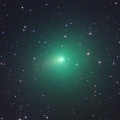
Now it is 11.4 mag (Nov. 12, Osamu Miyazaki). It will fade out rapidly after this. In the Northern Hemisphere, it will be getting lower gradually. But it will be getting higher again after January. In the Southern Hemisphere, it will be unobservable soon. Date(TT) R.A. (2000) Decl. Delta r Elong. m1 Best Time(A, h) Nov. 14 19 30.36 16 48.7 1.176 1.278 71 10.8 20:19 (118, 9) Nov. 21 19 22.59 18 8.7 1.301 1.268 65 10.8 20:29 (112, 0) |
 252P/LINEAR

|
It has not been observed yet in this apparition. It has brightened up to 4 mag in 2016, and 10 mag in 2021. It will fade out rapidly after this. It will be fainter than 18 mag in March. It stays extremely low in the Northern Hemisphere. In the Southern Hemisphere, it is not observable now, but it will appear in January. Mike Olason reported it was not detected, fainter than 15.5 mag on Nov. 4. Date(TT) R.A. (2000) Decl. Delta r Elong. m1 Best Time(A, h) Nov. 14 13 37.45 -11 3.7 1.818 1.008 24 11.4 3:09 (287, -5) Nov. 21 14 7.90 -12 55.3 1.840 1.021 24 11.4 3:03 (290, -6) |
10P/Tempel 2
|
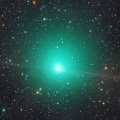
It brightened up to 6.9 mag in summer (Aug. 5, Juan Jose Gonzalez). Now it is 12.1 mag (Nov. 11, Yoshimi Nagai). It will fade out rapidly after this. It stays observable in good condition. Date(TT) R.A. (2000) Decl. Delta r Elong. m1 Best Time(A, h) Nov. 14 23 40.14 -22 43.8 1.123 1.768 113 11.9 20:19 (167, 77) Nov. 21 23 49.79 -20 40.9 1.216 1.808 109 12.3 20:29 (147, 73) |
C/2024 T5 ( ATLAS )
|
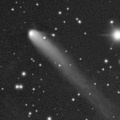
Now it is 12.6 mag (Oct. 22, Osamu Miyazaki). It stays 12 mag for a while. It stays observable in good condition. Date(TT) R.A. (2000) Decl. Delta r Elong. m1 Best Time(A, h) Nov. 14 5 38.66 -13 12.3 3.391 4.127 132 12.3 2:08 (180, 68) Nov. 21 5 34.85 -12 48.6 3.322 4.105 137 12.2 1:37 (180, 68) |
C/2026 A2 ( Bok )
|
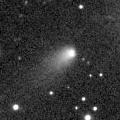
Now it is 12.7 mag (Nov. 6, Toru Yusa). Fading slowly. In the Northern Hemisphere, it stays observable in good condition. It stays extremely low in the Southern Hemisphere. But it will become high in summer. Date(TT) R.A. (2000) Decl. Delta r Elong. m1 Best Time(A, h) Nov. 14 20 52.81 45 42.9 1.583 1.995 99 12.9 20:19 (150, 0) Nov. 21 21 15.98 40 31.2 1.586 1.976 97 12.8 20:29 (145, 3) |
11P/Tempel-Swift-LINEAR
|
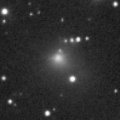
Now it is 12.9 mag (Nov. 10, Fumihiko Omori). It will fade out rapidly after this. It will be fainter than 18 mag in February. It stays observable in good condition. Date(TT) R.A. (2000) Decl. Delta r Elong. m1 Best Time(A, h) Nov. 14 2 51.93 24 27.1 0.402 1.388 171 13.0 23:19 (180, 31) Nov. 21 2 59.68 20 11.9 0.410 1.393 169 13.1 22:59 (180, 35) |
C/2024 J3 ( ATLAS )
|
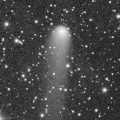
Now it is 13.4 mag (Nov. 4, Alfons Diepvens). It stays 14 mag for a while. In the Northern Hemisphere, it will be getting lower gradually. But it will be getting higher again after January. In the Southern Hemisphere, it is not observable now. Date(TT) R.A. (2000) Decl. Delta r Elong. m1 Best Time(A, h) Nov. 14 18 44.97 40 53.4 3.978 3.867 76 13.7 20:19 (131,-14) Nov. 21 18 51.20 41 2.3 4.008 3.866 74 13.7 20:29 (128,-19) |
78P/Gehrels 2

|
Now it is 14.6 mag (Nov. 11, Toru Yusa). Fading slowly. It stays observable in good condition. Date(TT) R.A. (2000) Decl. Delta r Elong. m1 Best Time(A, h) Nov. 14 8 6.75 12 35.3 1.773 2.306 109 13.9 3:09 (207, 38) Nov. 21 8 9.24 12 0.7 1.722 2.333 116 13.9 3:03 (202, 40) |
29P/Schwassmann-Wachmann 1
|
|
Appearing in the morning sky. Now it is bright in outburst. Now it is 12.5 mag (Nov. 11, Toru Yusa). It will be getting higher gradually. Date(TT) R.A. (2000) Decl. Delta r Elong. m1 Best Time(A, h) Nov. 14 12 32.52 -10 52.7 7.044 6.318 39 14.2 3:09 (278, 8) Nov. 21 12 36.48 -11 25.2 6.966 6.317 45 14.2 3:03 (276, 12) |
220P/McNaught
|
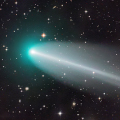
Major outburst of about 9 mag occured from May 31 to June 1, and it brightened up to 8.3 mag (June 3, Marco Goiato). Another major outburst occued on Aug. 5 and it brightened up to 6.4 mag (Aug. 6, Taras Prystavski). Now it is 12.8 mag (Nov. 11, Toru Yusa). It will fade out rapidly after this. It will be fainter than 18 mag in January. It stays observable in good condition. Date(TT) R.A. (2000) Decl. Delta r Elong. m1 Best Time(A, h) Nov. 14 3 0.82 1 39.4 1.128 2.095 163 14.4 23:26 (180, 53) Nov. 21 2 55.09 1 33.7 1.185 2.134 158 14.7 22:53 (180, 53) |
P/2026 T1 ( ATLAS )
|
Bright new comet. It must be just in outburst. Now it is 15.3 mag (Nov. 11, Toru Yusa). It stays 15 mag for a while. It will be unobservable in January in the Northern Hemisphere, or in December in the Southern Hemisphere. Date(TT) R.A. (2000) Decl. Delta r Elong. m1 Best Time(A, h) Nov. 14 19 44.96 -5 26.8 3.821 3.551 66 14.4 20:19 (102, 26) Nov. 21 19 52.69 -5 24.9 3.912 3.556 61 14.5 20:29 ( 98, 20) |
C/2014 UN271 ( Bernardinelli-Bernstein )
|
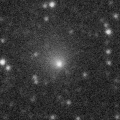
Very large comet. Now it is 14.4 mag (Nov. 6, Andrew Pearce). It stays 14 mag for a while. In the Northern Hemisphere, it is not observable now. In the Southern Hemisphere, it stays observable in good condition. In the Northern Hemisphere, it is not observable until 2030. Date(TT) R.A. (2000) Decl. Delta r Elong. m1 Best Time(A, h) Nov. 14 7 44.95 -74 33.3 13.610 13.445 78 14.5 3:09 (354, 50) Nov. 21 7 43.63 -74 57.2 13.592 13.425 78 14.4 3:03 (356, 50) |
C/2024 R4 ( PanSTARRS )
|
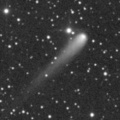
Now it is 14.8 mag (Nov. 6, ATLAS-MLO, Mauna Loa). It stays 14 mag for a while. In the Northern Hemisphere, it will be getting lower gradually. But it will be getting higher again after January. In the Southern Hemisphere, it is not observable now. Date(TT) R.A. (2000) Decl. Delta r Elong. m1 Best Time(A, h) Nov. 14 19 39.81 42 40.5 5.201 5.223 85 14.5 20:19 (139, -7) Nov. 21 19 40.08 42 7.9 5.232 5.194 82 14.4 20:29 (134,-12) |
2P/Encke
|
It will brighten up to 6-7 mag from January to February. Now it is 13.5 mag (Nov. 4, Alfons Diepvens). Brightening rapidly. In the Southern Hemisphere, it will be unobservable in January. But it will be observable again in February. In the Northern Hemisphere, it will be unobservable temporarily in February. Date(TT) R.A. (2000) Decl. Delta r Elong. m1 Best Time(A, h) Nov. 14 23 6.80 11 18.4 0.927 1.658 119 15.1 20:19 (164, 42) Nov. 21 22 55.35 9 36.5 0.929 1.569 109 14.5 20:29 (149, 40) |
88P/Howell
|
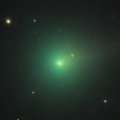
It brightened up to 9.6 mag in the very low sky in spring (Apr. 14, Chris Wyatt). Now it is 14.4 mag (Nov. 10, Toru Yusa). It will fade out rapidly after this. It will be fainter than 18 mag in February. It stays observable in good condition. Date(TT) R.A. (2000) Decl. Delta r Elong. m1 Best Time(A, h) Nov. 14 2 23.41 12 28.7 1.662 2.634 166 14.7 22:49 (180, 42) Nov. 21 2 17.27 12 11.0 1.737 2.677 157 15.0 22:16 (180, 43) |
260P/McNaught
|
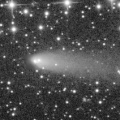
It brightened up to 13 mag from summer to autumn. Now it is 14.6 mag (Nov. 4, Alfons Diepvens). It will fade out rapidly after this. It will be fainter than 18 mag in January. In the Northern Hemisphere, it stays observable in good condition. It stays extremely low in the Southern Hemisphere. Date(TT) R.A. (2000) Decl. Delta r Elong. m1 Best Time(A, h) Nov. 14 6 19.37 51 22.6 0.981 1.792 130 14.7 2:50 (180, 4) Nov. 21 6 13.02 52 8.3 0.988 1.836 136 15.0 2:16 (180, 3) |
C/2025 V2 ( Rankin )
|
It is expected to brighten up to 12.5 mag in 2027 spring. Now it is 16.4 mag (Nov. 1, D. Buczynski). Brightening gradually. In the Northern Hemisphere, it will be getting higher gradually. In the Southern Hemisphere, it is not observable now, but it will appear in January. Date(TT) R.A. (2000) Decl. Delta r Elong. m1 Best Time(A, h) Nov. 14 13 24.55 13 25.1 3.144 2.493 41 15.0 3:09 (265,-17) Nov. 21 13 39.87 12 58.2 3.043 2.443 44 14.8 3:03 (265,-15) |
P/2026 R2 ( Leonard )
|
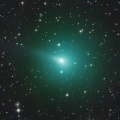
Bright new comet. It approached to Earth down to 0.3 a.u. in early October, and brightened up to 11.7 mag (Sept. 30, Thomas Lehmann). Now it is 13.3 mag (Nov. 5, Chris Wyatt). Fading rapidly. It will be fainter than 18 mag in January. In the Northern Hemisphere, it will never be observable after this. In the Southern Hemisphere, it will be getting higher gradually. Date(TT) R.A. (2000) Decl. Delta r Elong. m1 Best Time(A, h) Nov. 14 15 33.82 -69 57.5 0.990 0.867 51 14.9 20:19 ( 18, 22) Nov. 21 15 16.63 -71 33.6 1.111 0.926 51 15.4 3:03 (344, 23) |
C/2023 R1 ( PanSTARRS )
|
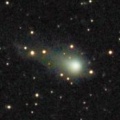
Now it is 14.7 mag (Sept. 19, Mike Olason). It stays 15 mag for a while. Now it is not observable. It will appear in December. Date(TT) R.A. (2000) Decl. Delta r Elong. m1 Best Time(A, h) Nov. 14 15 36.72 -21 26.0 5.043 4.060 6 15.2 20:19 ( 52,-12) Nov. 21 15 38.83 -22 1.1 5.077 4.090 2 15.2 3:03 (312,-16) |
C/2025 Y1 ( ATLAS )
|
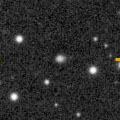
Now it is 16.1 mag (Aug. 5, Ken-ichi Kadota). Brightening slowly. It locates somewhat low in the Northern Hemisphere. But it will become high in winter. In the Southern Hemisphere, it is not observable now, but it will appear in December. Date(TT) R.A. (2000) Decl. Delta r Elong. m1 Best Time(A, h) Nov. 14 14 27.07 -5 23.0 5.195 4.260 17 15.4 3:09 (291,-18) Nov. 21 14 35.03 -5 52.6 5.110 4.209 21 15.3 3:03 (289,-15) |
123P/West-Hartley
|
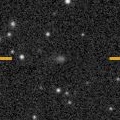
Now it is 15.8 mag (Nov. 4, Mike Olason). It stays 16 mag for a while. In the Northern Hemisphere, it will be getting higher gradually. In the Southern Hemisphere, it is not observable now, but it will appear in December. Date(TT) R.A. (2000) Decl. Delta r Elong. m1 Best Time(A, h) Nov. 14 12 46.99 5 44.2 2.805 2.198 43 15.4 3:09 (266, -5) Nov. 21 12 59.90 4 15.6 2.761 2.209 46 15.5 3:03 (266, -2) |
C/2022 QE78 ( ATLAS )
|
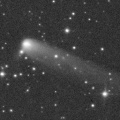
Now it is 16.7 mag (Oct. 19, D. Buczynski). It stays 16 mag for a while. In the Northern Hemisphere, it stays observable in good condition. In the Southern Hemisphere, it is not observable now, but it will appear in December. Date(TT) R.A. (2000) Decl. Delta r Elong. m1 Best Time(A, h) Nov. 14 11 45.78 26 30.6 6.607 6.297 67 15.6 3:09 (241, -5) Nov. 21 11 50.37 26 42.8 6.535 6.322 73 15.6 3:03 (239, -2) |
C/2025 M2 ( PanSTARRS )
|
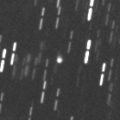
It is expected to brighten up to 12 mag from 2027 to 2028. Now it is 16.4 mag (Nov. 3, Jean-Gabriel Bosch). Brightening slowly. It will be unobservable in December. But it will be observable again in February. Date(TT) R.A. (2000) Decl. Delta r Elong. m1 Best Time(A, h) Nov. 14 18 38.11 -21 20.3 5.192 4.584 47 15.8 20:19 ( 78, 21) Nov. 21 18 39.04 -21 17.0 5.234 4.533 40 15.8 20:29 ( 74, 14) |
C/2022 N2 ( PanSTARRS )
|
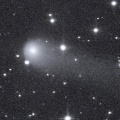
Now it is 16.2 mag (Nov. 10, Toru Yusa). It stays 16 mag for a while. In the Northern Hemisphere, it stays observable in good condition. It locates somewhat low in the Southern Hemisphere. Date(TT) R.A. (2000) Decl. Delta r Elong. m1 Best Time(A, h) Nov. 14 7 35.81 25 22.0 4.970 5.526 119 15.9 3:09 (194, 28) Nov. 21 7 35.06 25 24.4 4.918 5.567 126 15.9 3:03 (189, 29) |
112P/Urata-Niijima
|
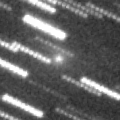
Now it is 16.1 mag (Oct. 28, Ken-ichi Kadota). It will fade out rapidly after this. It will be fainter than 18 mag in January. In the Northern Hemisphere, it stays observable in good condition. In the Southern Hemisphere, it will never be observable after this. Date(TT) R.A. (2000) Decl. Delta r Elong. m1 Best Time(A, h) Nov. 14 9 32.48 48 8.4 1.029 1.553 100 16.2 3:09 (207, -1) Nov. 21 9 51.53 49 31.6 1.023 1.582 103 16.3 3:03 (206, -2) |
(6993) 1995 BJ4
|
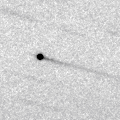
The cometary activity was detected on June 25 in the images of ATLAS. The long thin tail is visible. Now it is 16.5 mag (Nov. 3, Toru Yusa). Fading slowly. It will be fainter than 18 mag in February. It stays observable in good condition. Date(TT) R.A. (2000) Decl. Delta r Elong. m1 Best Time(A, h) Nov. 14 3 15.29 14 21.6 1.869 2.857 176 16.2 23:41 (180, 41) Nov. 21 3 9.52 14 1.0 1.878 2.856 169 16.4 23:08 (180, 41) |
(3200) Phaethon
|
Parent object of Geminids meteor shower. It approached to Sun down to 0.14 a.u. on Sept. 2. Now it is 14.5 mag (Oct. 12, Katsumi Yoshimoto). Fading gradually. It will be fainter than 18 mag in December. In the Northern Hemisphere, it stays observable in good condition. It locates somewhat low in the Southern Hemisphere. Date(TT) R.A. (2000) Decl. Delta r Elong. m1 Best Time(A, h) Nov. 14 22 7.99 28 39.6 0.806 1.473 109 16.2 20:19 (156, 22) Nov. 21 22 25.80 25 32.5 0.936 1.551 107 16.6 20:29 (150, 23) |
C/2025 J1 ( Borisov )
|
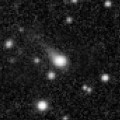
Now it is 16.5 mag (Nov. 2, Jean-Gabriel Bosch). Fading slowly. It stays observable in good condition. Date(TT) R.A. (2000) Decl. Delta r Elong. m1 Best Time(A, h) Nov. 14 6 55.51 2 14.9 3.205 3.845 123 16.4 3:09 (187, 53) Nov. 21 6 48.37 0 19.8 3.148 3.868 130 16.4 2:50 (180, 55) |
114P/Wiseman-Skiff
|
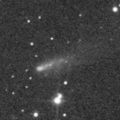
Now it is 16.9 mag (Oct. 31, Hidenori Nohara). Fading gradually. It will be fainter than 18 mag in February. It stays observable in good condition. Date(TT) R.A. (2000) Decl. Delta r Elong. m1 Best Time(A, h) Nov. 14 10 9.72 1 34.0 1.592 1.684 77 16.5 3:09 (245, 29) Nov. 21 10 20.62 -1 4.9 1.557 1.710 81 16.6 3:03 (245, 33) |
C/2021 G2 ( ATLAS )

|
Now it is 16.9 mag (Nov. 3, Toru Yusa). It stays 17 mag for a while. It locates somewhat low in the Northern Hemisphere. But it will become high in winter. In the Southern Hemisphere, it is not observable now, but it will appear in February. Date(TT) R.A. (2000) Decl. Delta r Elong. m1 Best Time(A, h) Nov. 14 17 29.83 11 36.4 8.365 7.691 44 16.6 20:19 ( 96,-11) Nov. 21 17 34.05 11 32.6 8.441 7.727 41 16.6 20:29 ( 92,-18) |
84P/Giclas
|
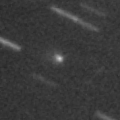
Now it is 16.9 mag (Nov. 8, Andrew Pearce). It stays 16 mag for a while. It locates somewhat low in the Northern Hemisphere. In the Southern Hemisphere, it will be getting lower gradually. Date(TT) R.A. (2000) Decl. Delta r Elong. m1 Best Time(A, h) Nov. 14 21 11.09 -23 18.7 1.781 1.913 82 16.7 20:19 ( 98, 53) Nov. 21 21 23.69 -22 21.2 1.825 1.887 78 16.6 20:29 ( 95, 48) |
P/2026 U1 ( Gafton )
|
|
Bright new periodic comet. Now it is 16.8 mag (Nov. 5, C. Gerhard). Brightening gradually. In the Northern Hemisphere, it stays observable in good condition. In the Southern Hemisphere, it will be getting higher gradually. Date(TT) R.A. (2000) Decl. Delta r Elong. m1 Best Time(A, h) Nov. 14 10 58.01 1 20.1 3.015 2.767 66 16.8 3:09 (254, 20) Nov. 21 11 6.64 0 19.0 2.893 2.732 70 16.7 3:03 (252, 23) |
C/2026 AZ17 ( Bok )
|
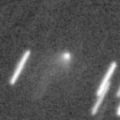
Now it is 17.2 mag (Nov. 3, ATLAS-HKO, Haleakala). Fading slowly. It will be unobservable in January in the Northern Hemisphere, or in December in the Southern Hemisphere. Date(TT) R.A. (2000) Decl. Delta r Elong. m1 Best Time(A, h) Nov. 14 18 40.07 -6 5.8 2.970 2.475 51 16.8 20:19 ( 92, 13) Nov. 21 18 54.05 -7 10.6 3.028 2.473 47 16.8 20:29 ( 88, 9) |
346P/Catalina
|
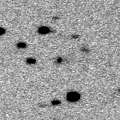
Now it is 17.3 mag (Oct. 28, Ken-ichi Kadota). It stays 17 mag for a while. In the Northern Hemisphere, it stays observable in good condition. It locates somewhat low in the Southern Hemisphere. Date(TT) R.A. (2000) Decl. Delta r Elong. m1 Best Time(A, h) Nov. 14 9 32.71 20 12.9 2.118 2.373 92 16.9 3:09 (224, 21) Nov. 21 9 40.86 20 48.2 2.052 2.393 97 16.8 3:03 (221, 23) |
C/2026 P2 ( PanSTARRS )
|
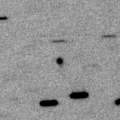
It is expected to brighten up to 13 mag from late 2027 to early 2028. At the high light, it will be observable in good condition in the Northern Hemisphere. But it will not be observable in the Southern Hemisphere. Now it is 16.8 mag (Oct. 28, ATLAS South Africa). It stays 17 mag for a while. In the Northern Hemisphere, it stays observable in good condition. In the Southern Hemisphere, it will be getting lower gradually after this, and it will be unobservable in February. Date(TT) R.A. (2000) Decl. Delta r Elong. m1 Best Time(A, h) Nov. 14 0 57.70 -0 33.4 3.717 4.533 141 16.9 21:24 (180, 55) Nov. 21 0 52.33 -0 7.3 3.741 4.479 133 16.9 20:51 (180, 55) |
C/2022 R6 ( PanSTARRS )
|
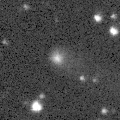
It was observed at 16 mag from 2025 to 2026. Now it is 16.7 mag (Nov. 2, ATLAS-HKO, Haleakala). It stays 17 mag for a while. In the Northern Hemisphere, it stays observable in good condition. In the Southern Hemisphere, it will be getting higher gradually. Date(TT) R.A. (2000) Decl. Delta r Elong. m1 Best Time(A, h) Nov. 14 10 22.63 5 21.1 7.384 7.205 75 16.9 3:09 (244, 24) Nov. 21 10 24.61 5 30.8 7.288 7.224 82 16.9 3:03 (241, 27) |
C/2026 O1 ( PanSTARRS )
|
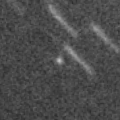
Now it is 17.1 mag (Nov. 1, ATLAS-MLO, Mauna Loa). Brightening slowly. It will be unobservable in January in the Northern Hemisphere, or in February in the Southern Hemisphere. But it will be observable again in March in the Southern Hemisphere. At the high light, it will be observable in good condition in the Southern Hemisphere, but it will not be observable in the Northern Hemisphere. Date(TT) R.A. (2000) Decl. Delta r Elong. m1 Best Time(A, h) Nov. 14 21 56.48 -32 23.9 3.325 3.447 88 17.0 20:19 ( 88, 66) Nov. 21 21 52.13 -32 39.4 3.388 3.378 81 16.9 20:29 ( 83, 57) |
C/2025 A1 ( Lemmon )

|
Now it is 16.6 mag (Oct. 31, Ken-ichi Kadota). It stays 17 mag for a while. In the Northern Hemisphere, it stays observable in good condition. In the Southern Hemisphere, it is not observable now, but it will appear in December. Date(TT) R.A. (2000) Decl. Delta r Elong. m1 Best Time(A, h) Nov. 14 11 38.02 30 22.9 5.651 5.415 71 17.1 3:09 (237, -6) Nov. 21 11 44.03 30 32.9 5.550 5.407 76 17.1 3:03 (235, -3) |
C/2026 C1 ( Tsuchinshan )
|
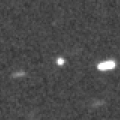
It is expected to brighten up to 4 mag in 2028 autumn. Now it is 17.2 mag (July 9, Yasukazu Ikari). Brightening slowly. It will be getting higher gradually. At the high light, it is observable in excellent condition in the Southern Hemisphere. In the Northern Hemisphere, it becomes observable after the perihelion passage. Date(TT) R.A. (2000) Decl. Delta r Elong. m1 Best Time(A, h) Nov. 14 12 39.89 -0 2.7 8.585 7.880 42 17.1 3:09 (270, 0) Nov. 21 12 41.82 -0 22.7 8.441 7.824 48 17.1 3:03 (268, 4) |
C/2025 E1 ( PanSTARRS )
|
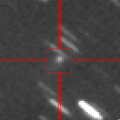
Now it is 17.6 mag (Sept. 12, ATLAS Chile). It stays 18 mag for a while. In the Northern Hemisphere, it will never be observable after this. Date(TT) R.A. (2000) Decl. Delta r Elong. m1 Best Time(A, h) Nov. 14 17 29.02 -80 26.0 4.356 4.022 64 17.3 20:19 ( 12, 34) Nov. 21 18 24.14 -79 25.5 4.393 4.029 62 17.3 20:29 ( 13, 34) |
P/2009 Y2 ( Kowalski )
|
Now it is 18.2 mag (Oct. 6, Toshiyuki Takahashi). Fading slowly. It will be fainter than 18 mag in February. In the Northern Hemisphere, it stays observable in good condition. In the Southern Hemisphere, it will be getting higher gradually. Date(TT) R.A. (2000) Decl. Delta r Elong. m1 Best Time(A, h) Nov. 14 5 24.37 34 18.5 1.484 2.376 147 17.4 1:55 (180, 21) Nov. 21 5 20.43 32 36.5 1.440 2.372 154 17.3 1:23 (180, 22) |
P/2018 VN2 = P/2026 M2 ( Leonard )
|
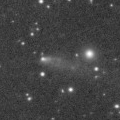
First return of a new periodic comet which was observed at 18 mag in 2018. Now it is 16.5 mag (Oct. 21, ATLAS-MLO, Mauna Loa). Fading gradually. It will be fainter than 18 mag in December. It stays observable in good condition. Date(TT) R.A. (2000) Decl. Delta r Elong. m1 Best Time(A, h) Nov. 14 1 47.64 15 21.0 1.290 2.242 158 17.3 22:14 (180, 40) Nov. 21 1 46.68 13 46.5 1.344 2.260 151 17.5 21:45 (180, 41) |
C/2019 E3 ( ATLAS )
|
Very far object. It stays 18 mag for a while. In the Northern Hemisphere, it will be unobservable in February. In the Southern Hemisphere, it stays observable in good condition. Date(TT) R.A. (2000) Decl. Delta r Elong. m1 Best Time(A, h) Nov. 14 23 48.69 -43 28.7 11.573 11.825 102 17.5 20:19 ( 5, 82) Nov. 21 23 46.74 -43 0.5 11.683 11.842 96 17.6 20:29 ( 44, 79) |
C/2026 S2 ( ATLAS )
|
|
Now it is 17.9 mag (Nov. 1, Jean-Gabriel Bosch). It stays 18 mag for a while. It stays observable in good condition. Date(TT) R.A. (2000) Decl. Delta r Elong. m1 Best Time(A, h) Nov. 14 5 37.23 -2 50.1 3.875 4.670 139 17.6 2:07 (180, 58) Nov. 21 5 26.40 -3 22.8 3.800 4.651 145 17.6 1:29 (180, 58) |
C/2025 B2 ( Borisov )
|
Now it is 17.8 mag (Nov. 6, ATLAS-MLO, Mauna Loa). It stays 18 mag for a while. In the Southern Hemisphere, it will never be observable after this. Date(TT) R.A. (2000) Decl. Delta r Elong. m1 Best Time(A, h) Nov. 14 17 39.03 68 20.6 8.184 8.247 90 17.6 20:19 (154,-34) Nov. 21 17 46.78 67 29.9 8.187 8.249 90 17.6 20:29 (152,-36) |
493P/2024 Q2 ( LONEOS )
|
Now it is 17.1 mag (Nov. 4, ATLAS-MLO, Mauna Loa). It stays 18 mag for a while. In the Northern Hemisphere, it stays observable in good condition. It locates somewhat low in the Southern Hemisphere. Date(TT) R.A. (2000) Decl. Delta r Elong. m1 Best Time(A, h) Nov. 14 10 23.93 30 12.8 4.191 4.222 85 17.7 3:09 (226, 6) Nov. 21 10 27.89 30 5.8 4.107 4.239 90 17.6 3:03 (224, 9) |
69P/Taylor
|
|
It has not been observed yet in this apparition. Fading slowly. It will be fainter than 18 mag in February. It stays observable in good condition. Date(TT) R.A. (2000) Decl. Delta r Elong. m1 Best Time(A, h) Nov. 14 7 31.94 13 22.5 1.627 2.270 118 17.7 3:09 (197, 40) Nov. 21 7 34.73 14 11.0 1.557 2.271 124 17.6 3:03 (191, 40) |
P/2020 G1 ( Pimentel )
|
|
First return of a new periodic comet which brightened up to 14.5 mag in 2020. It will brighten rapidly after this. It will be unobservable in January in the Northern Hemisphere, or in December in the Southern Hemisphere. But it will be observable again in January in the Southern Hemisphere. It is expected to brighten up to 13.5 mag from January to February. It is not observable around the high light in the Northern Hemisphere. Date(TT) R.A. (2000) Decl. Delta r Elong. m1 Best Time(A, h) Nov. 14 19 31.19 -4 31.4 1.447 1.346 63 17.9 20:19 (101, 23) Nov. 21 19 41.41 -5 11.9 1.413 1.245 59 17.7 20:29 ( 96, 18) |
373P/Rinner
|
|
It has not been observed yet in this apparition. It has brightened up to 4 mag in 2016, and 10 mag in 2021. It was not detected, fainter than 20 mag on Sept. 14 (Jean-Francois Soulier). Fading slowly. It will be fainter than 18 mag in January. It stays observable in good condition. Date(TT) R.A. (2000) Decl. Delta r Elong. m1 Best Time(A, h) Nov. 14 9 15.87 1 31.2 2.130 2.354 90 17.8 3:09 (233, 38) Nov. 21 9 22.24 0 9.1 2.060 2.365 95 17.8 3:03 (231, 42) |
C/2026 B3 ( PanSTARRS )

|
Now it is 17.4 mag (Mar. 21, Hidenori Nohara). It stays 17 mag for a while. In the Northern Hemisphere, it stays observable in good condition. In the Southern Hemisphere, it will be getting higher gradually. Date(TT) R.A. (2000) Decl. Delta r Elong. m1 Best Time(A, h) Nov. 14 11 21.88 -4 11.4 6.397 5.943 58 17.9 3:09 (262, 18) Nov. 21 11 22.23 -5 2.7 6.278 5.933 65 17.8 3:03 (260, 23) |
C/2022 E2 ( ATLAS )
|
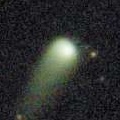
It was observed at 12-13 mag for a long time in 2024. Now it is 17.5 mag (Oct. 27, Ken-ichi Kadota). It stays 18 mag for a while. In the Northern Hemisphere, it stays observable in good condition. It locates somewhat low in the Southern Hemisphere. Date(TT) R.A. (2000) Decl. Delta r Elong. m1 Best Time(A, h) Nov. 14 21 41.85 19 25.2 7.201 7.469 101 17.8 20:19 (145, 27) Nov. 21 21 41.46 18 37.9 7.353 7.513 95 17.9 20:29 (136, 23) |
C/2024 G4 ( PanSTARRS )
|
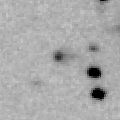
Now it is 17.9 mag (Oct. 11, Ken-ichi Kadota). It stays 18 mag for a while. In the Northern Hemisphere, it will be getting lower gradually. It locates somewhat low in the Southern Hemisphere. Date(TT) R.A. (2000) Decl. Delta r Elong. m1 Best Time(A, h) Nov. 14 20 22.81 -9 0.5 5.404 5.233 74 17.9 20:19 (106, 36) Nov. 21 20 27.68 -9 18.4 5.525 5.252 68 17.9 20:29 (100, 29) |
C/2025 R3 ( PanSTARRS )
|
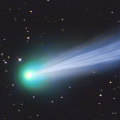
It brightened up to 4.0 mag in late April (Apr. 30, Chris Wyatt). It brightened up to 1.3 mag due to the forward scattering in the SOHO LASCO images (Apr. 25, Mikolaj Kaszczyk). It faded down to 13.4 mag until summer (Aug. 15, Thomas Lehmann). Fading gradually. It will be fainter than 18 mag soon. It locates somewhat low in the Northern Hemisphere. In the Southern Hemisphere, it stays observable in good condition. Date(TT) R.A. (2000) Decl. Delta r Elong. m1 Best Time(A, h) Nov. 14 6 43.70 -33 57.4 2.996 3.436 108 17.9 3:09 (217, 89) Nov. 21 6 31.20 -34 40.2 3.020 3.520 112 18.0 2:33 (180, 90) |
C/2023 C2 ( ATLAS )

|
It brightened up to 12.7 mag in 2024 summer (Aug. 7, 2024, Thomas Lehmann). Now it is 17.5 mag (Oct. 4, ATLAS-MLO, Mauna Loa). It stays 18 mag for a while. In the Northern Hemisphere, it stays observable in good condition. In the Southern Hemisphere, it will never be observable after this. Date(TT) R.A. (2000) Decl. Delta r Elong. m1 Best Time(A, h) Nov. 14 1 51.83 68 5.6 6.601 7.256 128 17.9 22:18 (180,-13) Nov. 21 1 45.91 67 33.7 6.649 7.308 128 17.9 21:45 (180,-13) |
169P/NEAT
|
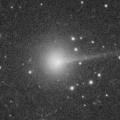
It approached to Earth down to 0.17 a.u. mid August, and brightened up to 10.8 mag (Aug. 11, Thomas Lehmann). Now it is 17.2 mag (Nov. 3, Toshiyuki Takahashi). It stays 18 mag for a while. In the Northern Hemisphere, it stays observable in good condition. In the Southern Hemisphere, it will be getting higher gradually. Date(TT) R.A. (2000) Decl. Delta r Elong. m1 Best Time(A, h) Nov. 14 11 32.62 -4 50.1 1.316 1.119 55 17.9 3:09 (264, 17) Nov. 21 11 44.42 -5 48.7 1.351 1.208 59 18.1 3:03 (264, 19) |
247P/LINEAR
|
Now it is 17.9 mag (Nov. 8, ATLAS-MLO, Mauna Loa). Fading slowly. In the Northern Hemisphere, it stays observable in good condition. It locates somewhat low in the Southern Hemisphere. Date(TT) R.A. (2000) Decl. Delta r Elong. m1 Best Time(A, h) Nov. 14 10 47.30 21 43.0 1.376 1.499 76 18.0 3:09 (236, 9) Nov. 21 11 7.46 20 44.8 1.350 1.511 78 17.9 3:03 (236, 9) |