Weekly Information about Bright Comets (2026 July 11: North)
|
Japanese version Home page |
Updated on July 11, 2026 |
|||
|
||||
|
Best time and the azimuth, altitude (A,h) are at lat. 35 deg in the Northern Hemisphere. Azimuth indicates 0 for south, 90 for west, 180 for north, 270 for east. |

|
|
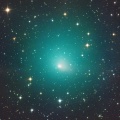
Now it is 9.1 mag (July 10, Marco Goiato). It will turn to fade out rapidly after the peak. In the Northern Hemisphere, it will be getting lower gradually. In the Southern Hemisphere, it stays observable in good condition. Date(TT) R.A. (2000) Decl. Delta r Elong. m1 Best Time(A, h) July 11 21 20.08 -15 17.9 0.461 1.437 150 8.4 2:06 ( 0, 40) July 18 21 30.79 -17 59.8 0.438 1.427 155 8.2 1:49 ( 0, 37) |
 88P/Howell
|
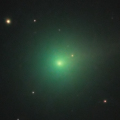
It brightened up to 9.6 mag in the very low sky in spring (Apr. 14, Chris Wyatt). Now it is 12.6 mag (July 9, Yoshimi Nagai). Fading gradually. It stays observable in good condition. Date(TT) R.A. (2000) Decl. Delta r Elong. m1 Best Time(A, h) July 11 2 23.41 10 42.2 1.861 1.812 71 11.7 3:10 (279, 31) July 18 2 34.30 11 37.0 1.836 1.857 75 11.9 3:17 (282, 36) |
78P/Gehrels 2

|
Now it is 13.1 mag (June 29, Mike Olason). It stays 12 mag for a while. In the Northern Hemisphere, it will be getting higher gradually. It locates somewhat low in the Southern Hemisphere. But it will become high in autumn. Date(TT) R.A. (2000) Decl. Delta r Elong. m1 Best Time(A, h) July 11 4 28.96 20 12.8 2.683 2.009 39 12.2 3:10 (253, 11) July 18 4 45.83 20 31.1 2.644 2.013 42 12.2 3:17 (255, 14) |
C/2025 R3 ( PanSTARRS )
|
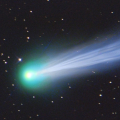
It brightened up to 4.0 mag in late April (Apr. 30, Chris Wyatt). It brightened up to 1.3 mag due to the forward scattering in the SOHO LASCO images (Apr. 25, Mikolaj Kaszczyk). Now it is 12.6 mag (June 23, Andrew Pearce). Fading rapidly. In the Northern Hemisphere, it is not observable now, but it will appear in September. In the Southern Hemisphere, it will be getting higher gradually. Date(TT) R.A. (2000) Decl. Delta r Elong. m1 Best Time(A, h) July 11 7 14.78 -12 56.8 2.446 1.717 35 12.3 3:10 (255,-42) July 18 7 19.47 -13 36.4 2.556 1.826 35 12.7 3:17 (261,-37) |
C/2024 T5 ( ATLAS )
|
Now it is 13.6 mag (June 28, Taras Prystavski). Brightening slowly. In the Northern Hemisphere, it is not observable now, but it will be observable soon. In the Southern Hemisphere, it stays observable in good condition. It is expected to brighten up to 11 mag in winter. Date(TT) R.A. (2000) Decl. Delta r Elong. m1 Best Time(A, h) July 11 4 50.25 -13 45.9 5.196 4.629 51 13.4 3:10 (278,-13) July 18 4 56.78 -13 28.7 5.113 4.597 54 13.3 3:17 (281, -7) |
C/2024 J3 ( ATLAS )
|
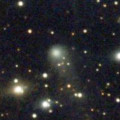
Now it is 13.7 mag (June 28, Toru Yusa). It stays 14 mag for a while. In the Northern Hemisphere, it stays observable in good condition. In the Southern Hemisphere, it will be unobservable in October. Date(TT) R.A. (2000) Decl. Delta r Elong. m1 Best Time(A, h) July 11 19 40.49 39 31.5 3.467 4.047 118 13.6 0:27 (180, 85) July 18 19 31.36 40 46.5 3.451 4.029 117 13.5 23:45 (180, 84) |
C/2023 R1 ( PanSTARRS )
|
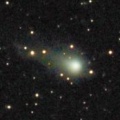
Now it is 13.5 mag (July 8, Yoshimi Nagai). Fading slowly. It will be getting lower gradually after this, and it will be unobservable in October in the Northern Hemisphere, or in November in the Southern Hemisphere. Date(TT) R.A. (2000) Decl. Delta r Elong. m1 Best Time(A, h) July 11 16 29.59 -10 8.7 2.844 3.660 137 13.6 21:12 ( 0, 45) July 18 16 16.65 -10 52.0 2.955 3.674 128 13.7 20:54 ( 8, 44) |
260P/McNaught
|
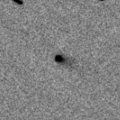
It will brighten up to 13 mag and will be observable in good condition from summer to autumn. Now it is 14.8 mag (June 29, Mike Olason). It stays 14 mag for a while. In the Northern Hemisphere, it stays observable in good condition. In the Southern Hemisphere, it will be getting lower gradually. Date(TT) R.A. (2000) Decl. Delta r Elong. m1 Best Time(A, h) July 11 2 1.14 12 24.1 1.305 1.445 75 13.9 3:10 (281, 36) July 18 2 20.88 15 40.2 1.265 1.432 76 13.7 3:17 (280, 41) |
29P/Schwassmann-Wachmann 1
|
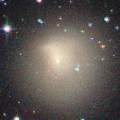
Now it is 14.8 mag (June 27, Toru Yusa). It will be unobservable soon in the Northern Hemisphere, or in September in the Southern Hemisphere. But it will be observable again in October in the Northern Hemisphere, or in November in the Southern Hemisphere. Date(TT) R.A. (2000) Decl. Delta r Elong. m1 Best Time(A, h) July 11 11 13.76 -1 54.9 6.731 6.317 61 14.1 20:59 ( 80, 11) July 18 11 17.17 -2 13.9 6.825 6.317 56 14.2 20:54 ( 82, 7) |
63P/Wild 1
|
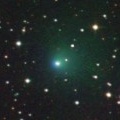
Now it is 14.8 mag (July 5, Martin Masek). Fading slowly. It will be unobservable soon in the Northern Hemisphere, or in September in the Southern Hemisphere. Date(TT) R.A. (2000) Decl. Delta r Elong. m1 Best Time(A, h) July 11 10 9.45 13 48.5 2.625 1.975 41 14.6 20:59 (102, 7) July 18 10 24.04 11 33.7 2.669 1.978 38 14.5 20:54 (101, 4) |
C/2014 UN271 ( Bernardinelli-Bernstein )
|
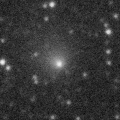
Very large comet. It is expected to brighten up to 13 mag in 2031. Now it is 14.9 mag (May 19, Andrew Pearce). It stays 15 mag for a while. In the Northern Hemisphere, it is not observable now. In the Southern Hemisphere, it stays observable in good condition. In the Northern Hemisphere, it is not observable until 2030. Date(TT) R.A. (2000) Decl. Delta r Elong. m1 Best Time(A, h) July 11 6 26.32 -68 9.0 13.761 13.813 90 14.6 3:10 (334,-43) July 18 6 33.30 -68 16.7 13.747 13.792 90 14.6 3:17 (333,-41) |
220P/McNaught
|
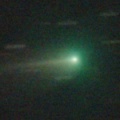
Major outburst of about 9 mag occured from May 31 to June 1, and it brightened up to 8.3 mag (June 3, Marco Goiato). Now it is 13.0 mag (July 9, Yoshimi Nagai). Fading rapidly. It will be fainter than 18 mag in September. It stays observable in good condition. Date(TT) R.A. (2000) Decl. Delta r Elong. m1 Best Time(A, h) July 11 1 42.60 7 40.6 1.364 1.581 81 14.6 3:10 (289, 37) July 18 1 58.99 8 23.3 1.330 1.593 84 15.5 3:17 (292, 41) |
169P/NEAT
|
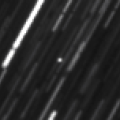
It will approach to Earth down to 0.17 a.u. in August. It is expected to brighten up to 10 mag from August to September. Now it is 15.5 mag (July 6, Jean-Claude Merlin). It brightens up to 10 mag, but it will turn to fade out rapidly after that. It will be getting lower gradually after this, and it will be unobservable in August. But it will be observable again in in the Northern Hemisphere, or in September in the Southern Hemisphere. Date(TT) R.A. (2000) Decl. Delta r Elong. m1 Best Time(A, h) July 11 19 2.96 15 32.7 0.399 1.354 142 15.2 23:44 ( 0, 71) July 18 18 40.49 20 24.3 0.324 1.267 135 14.8 22:53 ( 0, 76) |
C/2024 R4 ( PanSTARRS )
|
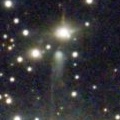
Now it is 14.7 mag (July 5, D. Buczynski). It stays 15 mag for a while. In the Northern Hemisphere, it stays observable in good condition. In the Southern Hemisphere, it will be unobservable in November. Date(TT) R.A. (2000) Decl. Delta r Elong. m1 Best Time(A, h) July 11 21 46.93 46 6.2 5.474 5.804 103 15.0 2:33 (180, 79) July 18 21 39.21 47 5.9 5.385 5.770 107 15.0 1:58 (180, 78) |
123P/West-Hartley
|
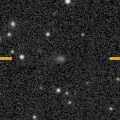
Now it is 17.6 mag (May 17, Kunihiro Shima). It stays 15 mag for a while. Now it is not observable. It will appear in September in the Northern Hemisphere. Date(TT) R.A. (2000) Decl. Delta r Elong. m1 Best Time(A, h) July 11 8 10.27 30 38.0 3.204 2.232 14 15.4 20:59 (132, -4) July 18 8 27.37 29 48.1 3.200 2.219 12 15.3 20:54 (133, -6) |
C/2022 QE78 ( ATLAS )
|
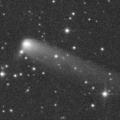
Now it is 15.5 mag (June 14, Alfons Diepvens). It stays 16 mag for a while. It will be unobservable soon in the Southern Hemisphere, or in August in the Northern Hemisphere. But it will be observable again in September in the Northern Hemisphere. Date(TT) R.A. (2000) Decl. Delta r Elong. m1 Best Time(A, h) July 11 9 56.16 29 44.8 6.698 5.904 35 15.3 20:59 (117, 13) July 18 10 2.32 29 25.9 6.767 5.923 31 15.4 20:54 (119, 10) |
P/2026 M1 ( ZTF )
|
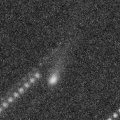
First return of a new periodic comet which brightened up to 17 mag in 2021. It will approach to Earth down to 0.17 a.u. from June to July. It was expected to brighten up to 14 mag. But actually, it is fainter than originally expected. Now it is 15.5 mag (June 29, Mike Olason). It will fade out rapidly after this. It will be fainter than 18 mag in September. In the Northern Hemisphere, it stays observable in good condition. In the Southern Hemisphere, it will be getting lower gradually. Date(TT) R.A. (2000) Decl. Delta r Elong. m1 Best Time(A, h) July 11 1 51.50 9 31.0 0.194 0.998 79 15.4 3:10 (286, 36) July 18 2 26.93 20 54.1 0.233 0.978 73 15.7 3:17 (273, 42) |
C/2021 G2 ( ATLAS )

|
Now it is 15.1 mag (June 28, Toru Yusa). It stays 16 mag for a while. In the Northern Hemisphere, it stays observable in good condition. In the Southern Hemisphere, it will be getting lower gradually after this, and it will be unobservable in November. Date(TT) R.A. (2000) Decl. Delta r Elong. m1 Best Time(A, h) July 11 17 2.93 16 2.8 6.362 7.048 129 15.5 21:46 ( 0, 71) July 18 17 1.13 15 58.1 6.454 7.083 124 15.6 21:16 ( 0, 71) |
C/2022 N2 ( PanSTARRS )
|
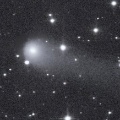
Now it is 15.8 mag (May 7, Ken-ichi Kadota). It stays 16 mag for a while. Now it is not observable. It will appear soon in the Northern Hemisphere, or in August in the Southern Hemisphere. Date(TT) R.A. (2000) Decl. Delta r Elong. m1 Best Time(A, h) July 11 6 13.12 26 55.3 5.810 4.840 15 15.7 3:10 (233, -4) July 18 6 21.01 26 51.1 5.813 4.875 20 15.7 3:17 (237, 0) |
235P/LINEAR
|
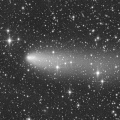
It became brighter than expected. Now it is 14.6 mag (June 27, Toru Yusa). It will fade out rapidly after this. It will be fainter than 18 mag in September. It stays observable in good condition. Date(TT) R.A. (2000) Decl. Delta r Elong. m1 Best Time(A, h) July 11 16 35.87 -8 24.5 1.637 2.490 138 15.9 21:19 ( 0, 47) July 18 16 35.52 -8 43.7 1.723 2.520 132 16.2 20:54 ( 1, 46) |
C/2025 Y1 ( ATLAS )
|
Now it is 16.2 mag (July 5, ATLAS South Africa). It stays 16 mag for a while. It will be unobservable in September in the Northern Hemisphere, or in October in the Southern Hemisphere. Date(TT) R.A. (2000) Decl. Delta r Elong. m1 Best Time(A, h) July 11 12 44.83 3 54.7 5.274 5.204 80 16.3 20:59 ( 70, 32) July 18 12 47.42 3 35.3 5.327 5.151 74 16.3 20:54 ( 73, 28) |
C/2026 A2 ( Bok )
|
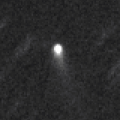
It will brighten up to 14 mag from autumn to winter. Now it is 16.5 mag (July 3, ATLAS-MLO, Mauna Loa). Brightening gradually. In the Northern Hemisphere, it stays observable in good condition. In the Southern Hemisphere, it is not observable now. Date(TT) R.A. (2000) Decl. Delta r Elong. m1 Best Time(A, h) July 11 16 50.09 79 8.2 2.806 2.754 76 16.6 21:29 (180, 46) July 18 16 31.67 79 8.2 2.755 2.699 76 16.5 20:54 (179, 46) |
C/2025 M2 ( PanSTARRS )
|
It is expected to brighten up to 12 mag from 2027 to 2028. Now it is 16.4 mag (July 6, ATLAS South Africa). It stays 16 mag for a while. It stays observable in good condition. Date(TT) R.A. (2000) Decl. Delta r Elong. m1 Best Time(A, h) July 11 20 16.00 -18 52.2 4.516 5.509 166 16.7 1:03 ( 0, 36) July 18 20 7.13 -19 14.9 4.444 5.457 175 16.6 0:27 ( 0, 36) |
161P/Hartley-IRAS

|
It is expected to brighten up 10 mag from autumn to winter, and it will be observable in good condition. Now it is 17.8 mag (July 8, Gerald Rhemann, Michael Jager). It will brighten rapidly after this. In the Northern Hemisphere, it will be getting higher gradually. In the Southern Hemisphere, it stays observable in good condition. Date(TT) R.A. (2000) Decl. Delta r Elong. m1 Best Time(A, h) July 11 3 17.12 -21 2.9 2.271 2.204 73 17.1 3:10 (297, 1) July 18 3 19.70 -20 30.2 2.112 2.139 77 16.7 3:17 (301, 7) |
C/2024 G6 ( ATLAS )
|
Now it is 16.8 mag (July 1, Alfons Diepvens). It stays 17 mag for a while. In the Northern Hemisphere, it stays observable in good condition. In the Southern Hemisphere, it will be getting lower gradually after this, and it will be unobservable in October. Date(TT) R.A. (2000) Decl. Delta r Elong. m1 Best Time(A, h) July 11 15 16.01 15 20.8 6.089 6.500 109 16.7 20:59 ( 38, 66) July 18 15 12.91 15 29.8 6.198 6.507 103 16.7 20:54 ( 50, 63) |
65P/Gunn
|
Now it is 18.3 mag (June 12, Kunihiro Shima). It stays 17 mag for a while. It stays observable in good condition. Date(TT) R.A. (2000) Decl. Delta r Elong. m1 Best Time(A, h) July 11 0 48.68 -5 4.9 3.138 3.448 99 16.9 3:10 (312, 38) July 18 0 51.34 -5 2.5 3.058 3.463 105 16.8 3:17 (321, 42) |
C/2023 RS61 ( PanSTARRS )
|
It is around 20 mag usually. However, it brightened in outburst in 2025 autumn up to 17.0 mag (Sept. 4, Taras Prystavski). Now it is 17.3 mag (Mar. 6, ATLAS-HKO, Haleakala). It stays 17 mag for a while. In the Northern Hemisphere, it will be getting higher gradually. It stays extremely low in the Southern Hemisphere. Date(TT) R.A. (2000) Decl. Delta r Elong. m1 Best Time(A, h) July 11 4 11.95 39 19.6 9.251 8.538 43 16.9 3:10 (237, 23) July 18 4 15.99 39 38.8 9.169 8.530 48 16.9 3:17 (240, 29) |
C/2024 G4 ( PanSTARRS )
|
Now it is 17.1 mag (June 11, ATLAS-MLO, Mauna Loa). It stays 17 mag for a while. It stays observable in good condition. Date(TT) R.A. (2000) Decl. Delta r Elong. m1 Best Time(A, h) July 11 20 15.84 3 0.2 4.060 4.976 151 17.0 1:02 ( 0, 58) July 18 20 13.49 2 28.4 4.043 4.986 155 17.0 0:33 ( 0, 58) |
C/2025 E1 ( PanSTARRS )
|
Now it is 17.2 mag (June 2, ATLAS Chile). It stays 17 mag for a while. In the Northern Hemisphere, it will never be observable after this. Date(TT) R.A. (2000) Decl. Delta r Elong. m1 Best Time(A, h) July 11 9 2.18 -63 8.9 3.961 4.049 87 17.1 20:59 ( 33,-39) July 18 9 10.42 -63 36.5 3.977 4.040 86 17.1 20:54 ( 33,-41) |
114P/Wiseman-Skiff
|
|
It has not been observed yet in this apparition. Brightening slowly. In the Northern Hemisphere, it will be getting higher gradually. It stays extremely low in the Southern Hemisphere. But it will become high in autumn. Date(TT) R.A. (2000) Decl. Delta r Elong. m1 Best Time(A, h) July 11 4 23.02 31 9.2 2.352 1.707 40 17.5 3:10 (244, 18) July 18 4 45.93 31 19.9 2.296 1.681 41 17.3 3:17 (245, 20) |
C/2019 E3 ( ATLAS )
|
Very far object. It stays 17 mag for a while. It stays extremely low in the Northern Hemisphere. In the Southern Hemisphere, it stays observable in good condition. Date(TT) R.A. (2000) Decl. Delta r Elong. m1 Best Time(A, h) July 11 0 42.22 -43 27.9 11.105 11.519 111 17.3 3:10 (336, 6) July 18 0 40.96 -43 43.6 11.049 11.535 116 17.3 3:17 (341, 8) |
C/2022 E2 ( ATLAS )
|
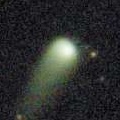
It was observed at 12-13 mag for a long time in 2024. Now it is 17.2 mag (July 3, ATLAS-HKO, Haleakala). It stays 18 mag for a while. In the Northern Hemisphere, it stays observable in good condition. It locates somewhat low in the Southern Hemisphere. Date(TT) R.A. (2000) Decl. Delta r Elong. m1 Best Time(A, h) July 11 22 59.15 32 17.2 6.344 6.669 104 17.4 3:10 (287, 82) July 18 22 54.70 32 13.8 6.291 6.714 110 17.4 3:13 ( 0, 87) |
C/2023 X2 ( Lemmon )
|
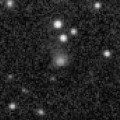
Now it is 17.0 mag (May 17, Kunihiro Shima). It stays 18 mag for a while. In the Northern Hemisphere, it stays observable in good condition. In the Southern Hemisphere, it will never be observable after this. Date(TT) R.A. (2000) Decl. Delta r Elong. m1 Best Time(A, h) July 11 13 30.56 75 0.5 5.572 5.299 69 17.4 20:59 (166, 46) July 18 13 36.68 73 13.5 5.593 5.314 69 17.4 20:54 (163, 46) |
24P/Schaumasse
|
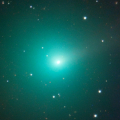
It brightened up to 8.4 mag in January (Jan. 14, Mitsunori Tsumura). Now it is 17.1 mag (June 15, Masayoshi Yoshimi). It will fade out rapidly after this. It will be fainter than 18 mag soon. In the Northern Hemisphere, it will be getting lower gradually. In the Southern Hemisphere, it stays observable in good condition. Date(TT) R.A. (2000) Decl. Delta r Elong. m1 Best Time(A, h) July 11 14 27.29 -9 53.1 1.903 2.436 109 17.4 20:59 ( 35, 38) July 18 14 32.36 -10 54.8 2.042 2.494 104 17.8 20:54 ( 39, 35) |
188P/LINEAR-Mueller
|
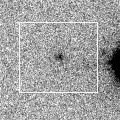
Now it is 18.2 mag (Jan. 17, Kunihiro Shima). It stays 18 mag for a while. In the Northern Hemisphere, it will be getting higher gradually. It stays extremely low in the Southern Hemisphere. Date(TT) R.A. (2000) Decl. Delta r Elong. m1 Best Time(A, h) July 11 4 10.37 27 47.0 3.270 2.619 42 17.7 3:10 (248, 18) July 18 4 23.13 28 35.2 3.221 2.631 46 17.7 3:17 (250, 23) |
C/2025 Q3 ( ATLAS )
|
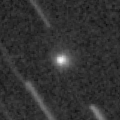
It brightened up to 14.1 mag in early 2026 (Jan. 16, Kunihiro Shima). Now it is 18.5 mag (June 13, John Drummond). It will fade out rapidly after this. It will be fainter than 18 mag soon. In the Northern Hemisphere, it will never be observable after this. It locates somewhat low in the Southern Hemisphere. Date(TT) R.A. (2000) Decl. Delta r Elong. m1 Best Time(A, h) July 11 6 41.49 -46 51.9 2.806 2.630 69 17.7 3:10 (304,-47) July 18 7 3.72 -48 51.2 2.836 2.677 70 18.0 3:17 (307,-45) |
C/2026 C1 ( Tsuchinshan )
|
It is expected to brighten up to 4 mag in 2028 autumn. Now it is 17.5 mag (July 5, ATLAS South Africa). It stays 18 mag for a while. It will be unobservable in August in the Northern Hemisphere, or in September in the Southern Hemisphere. But it will be observable again in October in the Northern Hemisphere. At the high light, it is observable in excellent condition in the Southern Hemisphere. In the Northern Hemisphere, it becomes observable after the perihelion passage. Date(TT) R.A. (2000) Decl. Delta r Elong. m1 Best Time(A, h) July 11 12 5.39 6 43.0 9.154 8.864 70 17.8 20:59 ( 79, 26) July 18 12 5.93 6 26.0 9.210 8.811 63 17.8 20:54 ( 82, 21) |
C/2023 H5 ( Lemmon )

|
Now it is 17.4 mag (July 2, Alfons Diepvens). It stays 18 mag for a while. In the Northern Hemisphere, it stays observable in good condition. In the Southern Hemisphere, it will never be observable after this. Date(TT) R.A. (2000) Decl. Delta r Elong. m1 Best Time(A, h) July 11 21 48.47 67 37.2 5.255 5.284 86 17.8 2:34 (180, 57) July 18 21 39.64 67 29.6 5.236 5.316 89 17.8 1:58 (180, 57) |
C/2026 AZ17 ( Bok )

|
Now it is 18.1 mag (July 5, Jean-Gabriel Bosch). It stays 18 mag for a while. It stays observable in good condition. Date(TT) R.A. (2000) Decl. Delta r Elong. m1 Best Time(A, h) July 11 16 19.67 25 44.6 2.272 2.857 115 17.8 21:03 ( 0, 81) July 18 16 19.37 24 17.3 2.280 2.821 111 17.8 20:54 ( 23, 78) |
P/2012 K3 ( Gibbs )
|
|
It was observed at 17 mag in 2012. It was expected to brighten up to 17 mag again in this apparition. But actually, it is much fainter. Now it is 21.0 mag (June 25, Pan-STARRS). Fading slowly. It stays observable in good condition. Date(TT) R.A. (2000) Decl. Delta r Elong. m1 Best Time(A, h) July 11 20 19.41 -15 14.9 1.105 2.102 164 20.9 1:06 ( 0, 40) July 18 20 16.20 -16 34.6 1.090 2.101 171 20.9 0:35 ( 0, 39) |