Weekly Information about Bright Comets (2026 Jan. 24: North)
|
Japanese version Home page |
Updated on January 24, 2026 |
|||
|
||||
|
Best time and the azimuth, altitude (A,h) are at lat. 35 deg in the Northern Hemisphere. Azimuth indicates 0 for south, 90 for west, 180 for north, 270 for east. |

|
|
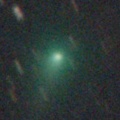
It was originally expected to brighten up to 5 mag in January. But actually, the brightness evolution was slower than originally expected. Now it is 6.7 mag (Jan. 23, David Seargent). It will fade out rapidly after this. In the Northern Hemisphere, it is not observable now, but it will appear in February. It locates somewhat low in the Southern Hemisphere. Date(TT) R.A. (2000) Decl. Delta r Elong. m1 Best Time(A, h) Jan. 24 21 15.05 -41 29.6 1.290 0.571 24 6.5 18:47 ( 52,-20) Jan. 31 22 21.02 -43 6.2 1.166 0.612 31 6.5 18:53 ( 48,-15) |
 C/2025 A6 ( Lemmon )
|
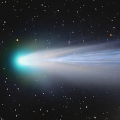
It brightened up to 3.7 mag in late October (Oct. 26, Juan Jose Gonzalez). Appearing in the morning sky in the Southern Hemisphere. Now it is brighter than originally predicted by 4 mag. Now it is 8.8 mag (Jan. 21, Chris Wyatt). Fading rapidly. In the Northern Hemisphere, it is not observable now, but it will appear in April. In the Southern Hemisphere, it stays observable in good condition. Date(TT) R.A. (2000) Decl. Delta r Elong. m1 Best Time(A, h) Jan. 24 17 5.96 -47 8.7 2.083 1.613 48 8.7 5:36 (329, -3) Jan. 31 17 1.19 -49 40.8 2.064 1.721 56 9.1 5:33 (334, -3) |
24P/Schaumasse
|
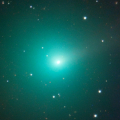
Now it is 9.2 mag (Jan. 18, Marco Goiato). It will fade out rapidly after this. It stays observable in good condition. Date(TT) R.A. (2000) Decl. Delta r Elong. m1 Best Time(A, h) Jan. 24 14 15.99 10 4.2 0.607 1.202 95 9.0 5:36 (344, 64) Jan. 31 14 35.72 9 0.1 0.616 1.221 96 9.3 5:33 (347, 63) |
88P/Howell
|
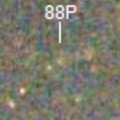
Now it is 14.5 mag (Jan. 14, Mike Olason). Brightening slowly. It stays extremely low in the Northern Hemisphere. But it will become high in summer. It locates somewhat low in the Southern Hemisphere. But it will become high in summer. It is fainter than this ephemeris recently. Date(TT) R.A. (2000) Decl. Delta r Elong. m1 Best Time(A, h) Jan. 24 18 12.61 -24 13.3 2.237 1.480 30 11.1 5:36 (303, 4) Jan. 31 18 38.36 -24 11.4 2.189 1.451 32 10.9 5:33 (303, 4) |
240P/NEAT
|
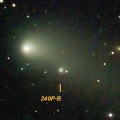
Now it is 11.5 mag (Jan. 9, Mitsunori Tsumura). Fading gradually. In the Northern Hemisphere, it stays observable in good condition. It locates somewhat low in the Southern Hemisphere. The component B also brightened rapidly. Now it is bright as 14.9 mag (Jan. 9, Mitsunori Tsumura). Date(TT) R.A. (2000) Decl. Delta r Elong. m1 Best Time(A, h) Jan. 24 3 25.15 21 44.0 1.583 2.140 110 12.3 19:11 ( 0, 77) Jan. 31 3 30.59 23 18.0 1.667 2.148 105 12.4 18:53 ( 5, 78) |
C/2025 T1 ( ATLAS )
|
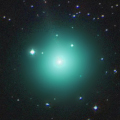
It brightened up to 9.0 mag from late November to early December (Nov. 22, Thomas Lehmann). Now it is 10.8 mag (Jan. 20, Mike Olason). Fading rapidly. It will be fainter than 18 mag in May. Now it is not observable. It will appear in March in the Southern Hemisphere. In the Northern Hemisphere, it will never be observable after this. Date(TT) R.A. (2000) Decl. Delta r Elong. m1 Best Time(A, h) Jan. 24 21 12.04 -9 46.7 2.319 1.392 15 12.3 18:47 ( 80, -3) Jan. 31 21 20.86 -11 42.8 2.424 1.459 8 12.8 18:53 ( 82, -9) |
235P/LINEAR
|
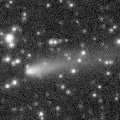
It became brighter than expected. Now it is 13.8 mag (Jan. 21, Chris Wyatt). It stays 14 mag for a while. It stays observable in good condition. Date(TT) R.A. (2000) Decl. Delta r Elong. m1 Best Time(A, h) Jan. 24 15 25.57 -17 44.9 2.102 1.995 70 13.1 5:36 (332, 32) Jan. 31 15 40.00 -18 3.7 2.040 2.003 73 13.1 5:33 (335, 33) |
C/2025 R3 ( PanSTARRS )
|
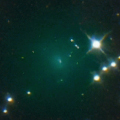
It became brighter than expected. It is expected to brighten up to 5 mag in April. Now it is 13.8 mag (Jan. 15, Michael Jager). It will brighten rapidly after this. In the Northern Hemisphere, it will be unobservable in February. But it will be observable again in March. In the Southern Hemisphere, it is not observable now, but it will appear in May. At the high light, it is observable in the low sky before the perihelion passage in the Northern Hemisphere, or after the perihelion in the Southern Hemisphere. Date(TT) R.A. (2000) Decl. Delta r Elong. m1 Best Time(A, h) Jan. 24 22 12.92 18 8.8 2.312 1.777 46 13.8 18:47 ( 96, 25) Jan. 31 22 14.20 17 47.6 2.287 1.667 40 13.5 18:53 (100, 18) |
29P/Schwassmann-Wachmann 1
|
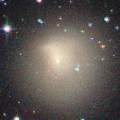
It brightened in outburst on Dec. 5. Now it is 12.4 mag (Jan. 21, Chris Wyatt). It stays observable in good condition. Date(TT) R.A. (2000) Decl. Delta r Elong. m1 Best Time(A, h) Jan. 24 11 32.58 -3 43.1 5.652 6.308 128 13.8 3:21 ( 0, 51) Jan. 31 11 31.00 -3 43.2 5.567 6.309 135 13.7 2:52 ( 0, 51) |
C/2022 N2 ( PanSTARRS )
|
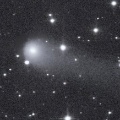
Now it is 14.1 mag (Jan. 3, Toru Yusa). Fading slowly. In the Northern Hemisphere, it stays observable in good condition. In the Southern Hemisphere, it will be unobservable in May. Date(TT) R.A. (2000) Decl. Delta r Elong. m1 Best Time(A, h) Jan. 24 3 17.53 24 19.5 3.688 4.124 109 14.0 19:04 ( 0, 79) Jan. 31 3 20.87 24 19.9 3.808 4.147 103 14.1 18:53 ( 17, 79) |
3I/2025 N1 ( ATLAS )
|
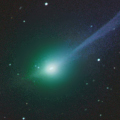
Third interstellar object in history following 1I/'Oumuamua and 2I/Borisov. The eccentricity is extremely big as 6. It approached to Sun down to 1.38 a.u. in late October. It brightened up to 8.9 mag in November (Nov. 12, Toshiyuki Takahashi). Now it is 12.8 mag (Jan. 20, Chris Wyatt). Fading rapidly. It will be fainter than 18 mag in March. It stays observable in good condition. Date(TT) R.A. (2000) Decl. Delta r Elong. m1 Best Time(A, h) Jan. 24 8 10.77 17 35.3 2.412 3.395 176 14.1 0:01 ( 0, 72) Jan. 31 7 50.37 18 28.0 2.661 3.622 165 14.7 23:07 ( 0, 73) |
C/2025 L1 ( ATLAS )
|
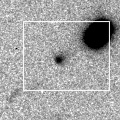
It is expected to brighten up to 13.5 mag and to be observable in good condition in 2026 spring. Now it is 16.0 mag (Jan. 2, Hidetaka Sato). Fading slowly. In the Northern Hemisphere, it will be getting higher gradually. In the Southern Hemisphere, it stays observable in good condition. Date(TT) R.A. (2000) Decl. Delta r Elong. m1 Best Time(A, h) Jan. 24 15 59.22 -29 52.2 1.941 1.686 60 14.2 5:36 (330, 18) Jan. 31 16 1.24 -26 50.9 1.814 1.697 67 14.1 5:33 (334, 23) |
C/2022 QE78 ( ATLAS )
|
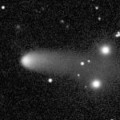
Now it is 14.6 mag (Jan. 11, Yoshimi Nagai). It stays 15 mag for a while. In the Northern Hemisphere, it stays observable in good condition. It locates somewhat low in the Southern Hemisphere. Date(TT) R.A. (2000) Decl. Delta r Elong. m1 Best Time(A, h) Jan. 24 9 19.29 26 57.4 4.606 5.564 165 14.3 1:08 ( 0, 82) Jan. 31 9 16.67 27 43.1 4.604 5.573 168 14.3 0:38 ( 0, 83) |
78P/Gehrels 2

|
It will brighten up to 12 mag in 2026 summer. Now it is 16.2 mag (Dec. 28, Francois Kugel). Brightening slowly. In the Northern Hemisphere, it will be unobservable in February. In the Southern Hemisphere, it is not observable now, but it will appear in May. Date(TT) R.A. (2000) Decl. Delta r Elong. m1 Best Time(A, h) Jan. 24 22 18.54 -7 1.0 3.140 2.345 30 14.5 18:47 ( 73, 12) Jan. 31 22 31.64 -5 56.1 3.155 2.318 26 14.4 18:53 ( 77, 8) |
C/2024 J3 ( ATLAS )
|
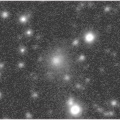
It will brighten up to 13 mag in 2026. Now it is 14.6 mag (Dec. 19, Kunihiro Shima). Brightening slowly. In the Northern Hemisphere, it will be getting higher gradually. In the Southern Hemisphere, it is not observable now, but it will appear in February. Date(TT) R.A. (2000) Decl. Delta r Elong. m1 Best Time(A, h) Jan. 24 19 32.19 -1 26.2 5.572 4.673 21 14.6 5:36 (273, 2) Jan. 31 19 37.45 -0 25.4 5.512 4.640 25 14.6 5:33 (275, 7) |
C/2024 T5 ( ATLAS )
|
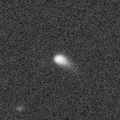
Now it is 14.5 mag (Jan. 7, Ken-ichi Kadota). It stays 14 mag for a while. In the Northern Hemisphere, it will be unobservable in March. In the Southern Hemisphere, it stays observable in good condition. It is expected to brighten up to 11 mag in winter between 2026 and 2027. Date(TT) R.A. (2000) Decl. Delta r Elong. m1 Best Time(A, h) Jan. 24 2 36.59 -37 4.2 5.583 5.514 80 14.7 18:47 ( 5, 18) Jan. 31 2 38.20 -35 46.2 5.612 5.474 76 14.6 18:53 ( 12, 18) |
C/2021 G2 ( ATLAS )

|
Now it is 15.2 mag (Jan. 3, Ken-ichi Kadota). It stays 15 mag for a while. In the Northern Hemisphere, it stays observable in good condition. In the Southern Hemisphere, it will be getting higher gradually. Date(TT) R.A. (2000) Decl. Delta r Elong. m1 Best Time(A, h) Jan. 24 17 6.04 1 41.6 6.802 6.257 52 14.8 5:36 (295, 33) Jan. 31 17 10.35 2 15.5 6.751 6.288 58 14.8 5:33 (298, 37) |
C/2014 UN271 ( Bernardinelli-Bernstein )
|
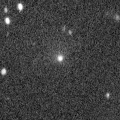
Very large comet. It is expected to brighten up to 13 mag in 2031. Now it is 14.6 mag (Jan. 20, Chris Wyatt). It stays 15 mag for a while. In the Northern Hemisphere, it is not observable now. In the Southern Hemisphere, it stays observable in good condition. In the Northern Hemisphere, it is not observable until 2030. Date(TT) R.A. (2000) Decl. Delta r Elong. m1 Best Time(A, h) Jan. 24 4 47.36 -74 5.9 14.458 14.327 80 14.9 20:31 ( 0,-19) Jan. 31 4 45.19 -73 46.9 14.433 14.305 80 14.9 20:01 ( 0,-19) |
40P/Vaisala 1
|
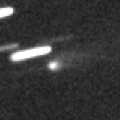
It became brighter than expected. Now it is 14.3 mag (Jan. 21, Michael Jager). Fading slowly. In the Northern Hemisphere, it stays observable in good condition. In the Southern Hemisphere, it will be getting higher gradually. Date(TT) R.A. (2000) Decl. Delta r Elong. m1 Best Time(A, h) Jan. 24 16 11.29 -10 43.4 2.238 1.965 61 15.2 5:36 (317, 33) Jan. 31 16 25.93 -11 1.8 2.202 1.991 64 15.2 5:33 (319, 34) |
C/2023 R1 ( PanSTARRS )
|
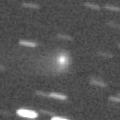
Now it is 15.3 mag (Dec. 19, Kunihiro Shima). Brightening slowly. It locates somewhat low in the Northern Hemisphere. But it will become high in spring. In the Southern Hemisphere, it is not observable now, but it will appear in February. Date(TT) R.A. (2000) Decl. Delta r Elong. m1 Best Time(A, h) Jan. 24 19 28.04 -2 52.6 4.541 3.642 21 15.2 5:36 (275, 2) Jan. 31 19 30.02 -3 3.9 4.500 3.630 24 15.2 5:33 (279, 7) |
210P/Christensen
|
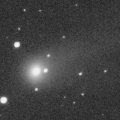
It brightened up to 9.5 mag in late November (Nov. 28, Michael Jager, Gerald Rhemann, E. Prosperi). Now it is 15.0 mag (Jan. 21, Michael Jager). Fading rapidly. It will be fainter than 18 mag in March. It stays observable in good condition. Date(TT) R.A. (2000) Decl. Delta r Elong. m1 Best Time(A, h) Jan. 24 15 37.95 -8 22.2 1.216 1.274 69 15.3 5:36 (324, 39) Jan. 31 15 44.24 -8 7.6 1.234 1.371 75 15.7 5:33 (329, 42) |
C/2025 R2 ( SWAN )
|
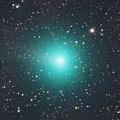
It brightened up to 5.2 mag in October (Oct. 11, Virgilio Gonano). Now it is 14.7 mag (Jan. 9, Toru Yusa). Fading rapidly. It will be fainter than 18 mag in March. In the Northern Hemisphere, it will be getting lower gradually. It stays extremely low in the Southern Hemisphere. Date(TT) R.A. (2000) Decl. Delta r Elong. m1 Best Time(A, h) Jan. 24 1 31.72 14 23.2 2.371 2.453 82 15.5 18:47 ( 50, 61) Jan. 31 1 40.97 15 6.1 2.561 2.548 78 15.8 18:53 ( 59, 58) |
C/2022 R6 ( PanSTARRS )
|
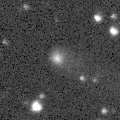
Now it is 16.1 mag (Jan. 12, ATLAS-MLO, Mauna Loa). It stays 16 mag for a while. It stays observable in good condition. Date(TT) R.A. (2000) Decl. Delta r Elong. m1 Best Time(A, h) Jan. 24 8 46.10 -9 43.9 5.769 6.643 150 16.0 0:35 ( 0, 45) Jan. 31 8 43.45 -9 4.0 5.755 6.650 153 16.0 0:05 ( 0, 46) |
C/2024 R4 ( PanSTARRS )
|
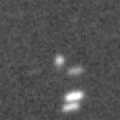
It brightened rapidly. It is expected to brighten up to 13.5 mag from 2027 to 2028. Now it is 16.2 mag (Jan. 4, Alfons Diepvens). It stays 16 mag for a while. It locates somewhat low in the Northern Hemisphere. But it will become high in spring. In the Southern Hemisphere, it is not observable now, but it will appear in April. Date(TT) R.A. (2000) Decl. Delta r Elong. m1 Best Time(A, h) Jan. 24 21 40.72 21 56.2 7.344 6.689 45 16.3 18:47 (103, 20) Jan. 31 21 43.41 22 20.6 7.353 6.650 41 16.3 18:53 (108, 14) |
C/2025 J1 ( Borisov )
|
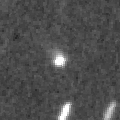
Now it is 16.4 mag (Jan. 7, Ken-ichi Kadota). It stays 17 mag for a while. In the Northern Hemisphere, it stays observable in good condition. In the Southern Hemisphere, it is not observable now. Date(TT) R.A. (2000) Decl. Delta r Elong. m1 Best Time(A, h) Jan. 24 5 31.06 73 55.3 3.197 3.794 120 16.3 21:17 (180, 51) Jan. 31 5 12.30 71 13.4 3.217 3.773 117 16.3 20:31 (180, 54) |
C/2025 Q3 ( ATLAS )
|
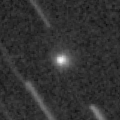
Now it is 15.9 mag (Jan. 12, ATLAS-MLO, Mauna Loa). Fading slowly. In the Northern Hemisphere, it will be getting lower gradually after this, and it will be unobservable in March. Date(TT) R.A. (2000) Decl. Delta r Elong. m1 Best Time(A, h) Jan. 24 2 3.66 -13 51.7 2.072 2.147 80 16.4 18:47 ( 18, 39) Jan. 31 2 5.97 -15 24.4 2.174 2.134 74 16.5 18:53 ( 27, 35) |
145P/Shoemaker-Levy 5
|
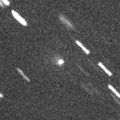
Now it is 16.4 mag (Jan. 7, ATLAS-HKO, Haleakala). It stays 17 mag for a while. It will be unobservable in March in the Southern Hemisphere, or in May in the Northern Hemisphere. Date(TT) R.A. (2000) Decl. Delta r Elong. m1 Best Time(A, h) Jan. 24 0 19.78 3 23.8 2.137 1.891 62 16.4 18:47 ( 59, 41) Jan. 31 0 33.90 5 28.5 2.194 1.890 59 16.4 18:53 ( 66, 39) |
C/2022 E2 ( ATLAS )
|
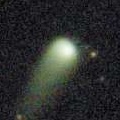
It was observed at 12-13 mag for a long time in 2024. Now it is 15.9 mag (Jan. 2, ATLAS-MLO, Mauna Loa). It stays 17 mag for a while. It locates somewhat low in the Northern Hemisphere. But it will become high in spring. In the Southern Hemisphere, it is not observable now, but it will appear in April. Date(TT) R.A. (2000) Decl. Delta r Elong. m1 Best Time(A, h) Jan. 24 22 37.68 29 37.9 6.074 5.625 58 16.5 18:47 (104, 35) Jan. 31 22 40.53 29 10.3 6.198 5.667 53 16.5 18:53 (107, 29) |
164P/Christensen
|
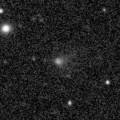
Now it is 16.5 mag (Jan. 9, Mitsunori Tsumura). Fading gradually. It will be fainter than 18 mag in April. In the Northern Hemisphere, it stays observable in good condition. It locates somewhat low in the Southern Hemisphere. Date(TT) R.A. (2000) Decl. Delta r Elong. m1 Best Time(A, h) Jan. 24 11 24.66 26 9.0 1.891 2.704 137 16.5 3:13 ( 0, 81) Jan. 31 11 21.08 27 20.2 1.882 2.744 144 16.5 2:42 ( 0, 82) |
93P/Lovas 1
|
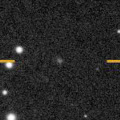
Now it is 17.2 mag (Jan. 4, Alfons Diepvens). Brightening slowly. In the Northern Hemisphere, it will be unobservable in March. In the Southern Hemisphere, it is not observable now. It will brighten up to 15.5 mag in spring. But it is not observable around the perihelion passage. Date(TT) R.A. (2000) Decl. Delta r Elong. m1 Best Time(A, h) Jan. 24 22 55.87 -2 46.3 2.603 1.964 40 16.7 18:47 ( 70, 22) Jan. 31 23 9.79 -0 56.8 2.616 1.930 37 16.5 18:53 ( 75, 19) |
493P/2024 Q2 ( LONEOS )

|
Now it is 16.6 mag (Jan. 10, Hirohisa Sato). It stays 17 mag for a while. In the Northern Hemisphere, it stays observable in good condition. In the Southern Hemisphere, it will be unobservable in April. Date(TT) R.A. (2000) Decl. Delta r Elong. m1 Best Time(A, h) Jan. 24 4 22.57 51 9.3 3.192 3.823 123 16.5 20:09 (180, 74) Jan. 31 4 23.42 50 30.9 3.265 3.824 117 16.6 19:42 (180, 74) |
218P/LINEAR

|
It will brighten up to 16 mag in spring. Now it is 16.8 mag (Dec. 30, Hidenori Nohara). It stays 16 mag for a while. It locates somewhat low in the Northern Hemisphere. In the Southern Hemisphere, it stays observable in good condition. Date(TT) R.A. (2000) Decl. Delta r Elong. m1 Best Time(A, h) Jan. 24 16 0.07 -19 36.0 1.345 1.235 61 16.8 5:36 (325, 27) Jan. 31 16 32.25 -20 41.0 1.311 1.202 61 16.6 5:33 (324, 25) |
195P/Hill

|
Now it is 17.4 mag (Jan. 11, ATLAS South Africa). It stays 17 mag for a while. It locates somewhat low in the Northern Hemisphere. In the Southern Hemisphere, it stays observable in good condition. Date(TT) R.A. (2000) Decl. Delta r Elong. m1 Best Time(A, h) Jan. 24 9 49.24 -33 39.6 3.893 4.508 123 16.7 1:38 ( 0, 21) Jan. 31 9 45.69 -33 58.9 3.852 4.514 126 16.7 1:07 ( 0, 21) |
43P/Wolf-Harrington

|
Now it is 16.5 mag (Jan. 11, ATLAS-MLO, Mauna Loa). Fading slowly. It will be fainter than 18 mag in May. It stays observable in good condition. Date(TT) R.A. (2000) Decl. Delta r Elong. m1 Best Time(A, h) Jan. 24 11 15.30 -9 4.5 2.003 2.732 129 16.7 3:04 ( 0, 46) Jan. 31 11 13.56 -9 17.6 1.958 2.754 136 16.7 2:35 ( 0, 46) |
C/2025 K1 ( ATLAS )
|
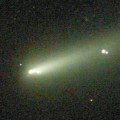
It brightened up to 9.3 mag in November (Nov. 2, Virgilio Gonano). The nucleus was split into four components. Now it is 15.8 mag (Jan. 7, Thomas Lehmann). Fading rapidly. It will be fainter than 18 mag in February. In the Northern Hemisphere, it will be getting lower gradually. In the Southern Hemisphere, it will be unobservable in February. Date(TT) R.A. (2000) Decl. Delta r Elong. m1 Best Time(A, h) Jan. 24 1 6.08 32 58.6 2.055 2.203 85 16.7 18:47 ( 94, 66) Jan. 31 1 10.66 32 22.9 2.278 2.308 79 17.1 18:53 ( 96, 60) |
C/2023 F3 ( ATLAS )
|
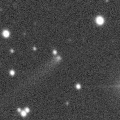
Now it is 16.9 mag (Jan. 8, ATLAS-HKO, Haleakala). It stays 17 mag for a while. It stays observable in good condition. Date(TT) R.A. (2000) Decl. Delta r Elong. m1 Best Time(A, h) Jan. 24 10 23.22 -23 56.5 5.176 5.832 127 16.7 2:12 ( 0, 31) Jan. 31 10 15.80 -23 23.4 5.125 5.856 134 16.7 1:37 ( 0, 31) |
261P/Larson
|
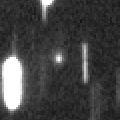
Now it is 16.4 mag (Jan. 5, WFST, Lenghu). Fading gradually. It will be fainter than 18 mag in April. It will be unobservable in February in the Southern Hemisphere, or in March in the Northern Hemisphere. Date(TT) R.A. (2000) Decl. Delta r Elong. m1 Best Time(A, h) Jan. 24 23 13.09 0 1.7 2.586 2.026 45 16.7 18:47 ( 70, 27) Jan. 31 23 28.00 1 34.2 2.643 2.033 42 16.8 18:53 ( 74, 24) |
C/2024 A1 ( ATLAS )
|
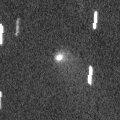
Now it is 16.4 mag (Jan. 4, Ken-ichi Kadota). Fading slowly. It will be fainter than 18 mag in May. In the Northern Hemisphere, it stays observable in good condition. In the Southern Hemisphere, it will never be observable after this. Date(TT) R.A. (2000) Decl. Delta r Elong. m1 Best Time(A, h) Jan. 24 7 34.83 61 19.2 3.562 4.336 137 16.7 23:20 (180, 64) Jan. 31 7 19.88 62 19.5 3.638 4.363 132 16.8 22:37 (180, 63) |
C/2024 G6 ( ATLAS )
|
Now it is 17.0 mag (July 25, Ken-ichi Kadota). It stays 17 mag for a while. In the Northern Hemisphere, it stays observable in good condition. In the Southern Hemisphere, it will be getting higher gradually. Date(TT) R.A. (2000) Decl. Delta r Elong. m1 Best Time(A, h) Jan. 24 16 33.98 -5 0.3 6.905 6.433 57 16.9 5:36 (307, 34) Jan. 31 16 35.42 -4 18.4 6.798 6.431 64 16.8 5:33 (312, 38) |
C/2023 X2 ( Lemmon )

|
Now it is 17.0 mag (Nov. 29, Ken-ichi Kadota). It stays 17 mag for a while. In the Northern Hemisphere, it stays observable in good condition. In the Southern Hemisphere, it will never be observable after this. Date(TT) R.A. (2000) Decl. Delta r Elong. m1 Best Time(A, h) Jan. 24 19 59.33 81 53.5 4.808 5.093 101 16.9 5:36 (190, 34) Jan. 31 20 17.14 81 32.8 4.844 5.095 99 16.9 5:33 (190, 35) |
C/2023 H5 ( Lemmon )

|
Now it is 16.6 mag (Dec. 26, Kunihiro Shima). It stays 17 mag for a while. In the Northern Hemisphere, it stays observable in good condition. In the Southern Hemisphere, it will never be observable after this. Date(TT) R.A. (2000) Decl. Delta r Elong. m1 Best Time(A, h) Jan. 24 19 28.21 61 39.5 4.677 4.639 81 16.9 5:36 (214, 33) Jan. 31 19 45.69 61 29.3 4.727 4.660 80 17.0 5:33 (215, 33) |
123P/West-Hartley
|
|
It will brighten up to 15 mag from autumn to winter in 2026. Now it is 17.7 mag (Jan. 7, Hirohisa Sato). Brightening slowly. In the Northern Hemisphere, it stays observable in good condition. In the Southern Hemisphere, it will be unobservable in May. Date(TT) R.A. (2000) Decl. Delta r Elong. m1 Best Time(A, h) Jan. 24 3 19.64 27 40.5 2.287 2.792 110 17.0 19:06 ( 0, 83) Jan. 31 3 21.83 27 54.2 2.349 2.763 104 16.9 18:53 ( 22, 82) |
C/2023 RS61 ( PanSTARRS )
|
Although it is around 20 mag usually, now it is bright in outburst. Now it is 17.5 mag (Jan. 7, W. Hasubick). It stays 17 mag for a while. It will be unobservable in March in the Southern Hemisphere, or in May in the Northern Hemisphere. Date(TT) R.A. (2000) Decl. Delta r Elong. m1 Best Time(A, h) Jan. 24 2 42.55 36 11.1 8.441 8.746 104 17.0 18:47 (110, 86) Jan. 31 2 43.41 36 0.8 8.539 8.737 98 17.0 18:53 (100, 79) |
C/2023 C2 ( ATLAS )

|
It brightened up to 12.7 mag in 2024 summer (Aug. 7, 2024, Thomas Lehmann). Now it is 16.9 mag (Jan. 12, ATLAS-HKO, Haleakala). Fading slowly. It will be fainter than 18 mag in April. In the Northern Hemisphere, it will be getting lower gradually. In the Southern Hemisphere, it will never be observable after this. Date(TT) R.A. (2000) Decl. Delta r Elong. m1 Best Time(A, h) Jan. 24 23 17.54 47 53.4 5.118 5.000 77 17.0 18:47 (125, 47) Jan. 31 23 25.80 47 54.0 5.241 5.056 73 17.1 18:53 (126, 43) |
(306173) 2010 NK83
|
|
Peculiar asteroid moving along a cometary orbit. Now it is 17.0 mag (Jan. 14, Takaaki Oribe). Fading gradually. It will be fainter than 18 mag in February. In the Northern Hemisphere, it stays observable in good condition. It locates somewhat low in the Southern Hemisphere. Date(TT) R.A. (2000) Decl. Delta r Elong. m1 Best Time(A, h) Jan. 24 7 47.43 25 47.7 1.645 2.619 169 17.1 23:32 ( 0, 81) Jan. 31 7 43.50 26 28.3 1.685 2.639 161 17.3 23:01 ( 0, 81) |
47P/Ashbrook-Jackson

|
Now it is 16.9 mag (Jan. 7, Thomas Lehmann). It stays 18 mag for a while. It will be unobservable in February in the Southern Hemisphere, or in March in the Northern Hemisphere. Date(TT) R.A. (2000) Decl. Delta r Elong. m1 Best Time(A, h) Jan. 24 23 49.80 2 50.2 3.297 2.853 55 17.3 18:47 ( 65, 35) Jan. 31 23 58.97 4 3.9 3.380 2.860 50 17.3 18:53 ( 71, 32) |
C/2019 E3 ( ATLAS )
|
Very far object. Now it is 16.6 mag (Oct. 19, ATLAS Chile). It stays 17 mag for a while. In the Northern Hemisphere, it is not observable now. It locates somewhat low in the Southern Hemisphere. But it will become high in spring. Date(TT) R.A. (2000) Decl. Delta r Elong. m1 Best Time(A, h) Jan. 24 0 6.89 -48 40.5 11.718 11.156 53 17.3 18:47 ( 27, -2) Jan. 31 0 8.25 -47 59.9 11.779 11.170 49 17.3 18:53 ( 32, -5) |
C/2024 G2 ( ATLAS )

|
Now it is 17.3 mag (Jan. 11, ATLAS-MLO, Mauna Loa). It stays 18 mag for a while. It stays observable in good condition. Date(TT) R.A. (2000) Decl. Delta r Elong. m1 Best Time(A, h) Jan. 24 12 3.90 -7 22.1 5.047 5.599 119 17.5 3:52 ( 0, 47) Jan. 31 12 0.23 -6 22.2 4.955 5.614 127 17.5 3:21 ( 0, 48) |
C/2026 A1 ( MAPS )
|
Kreutz sungrazer comet discovered furthest from Sun in history. It will approach to Sun down to 0.005 a.u. on Apr. 4. Now it is 17.7 mag (Jan. 15, Adriano Valvasori). It will brighten rapidly after this. It will be unobservable in March. But it will be observable again in April in the Southern Hemisphere. Date(TT) R.A. (2000) Decl. Delta r Elong. m1 Best Time(A, h) Jan. 24 4 34.05 -31 52.6 1.358 1.870 104 17.9 20:18 ( 0, 23) Jan. 31 4 9.06 -29 54.0 1.326 1.744 96 17.5 19:25 ( 0, 25) |
C/2017 K2 ( PanSTARRS )
|
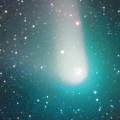
It brightened up to 8 mag from 2022 summer to 2023 spring. Now it is 17.9 mag (Jan. 11, ATLAS-HKO, Haleakala). It stays 18 mag for a while. In the Northern Hemisphere, it stays observable in good condition. It locates somewhat low in the Southern Hemisphere. Date(TT) R.A. (2000) Decl. Delta r Elong. m1 Best Time(A, h) Jan. 24 5 37.57 31 3.9 9.670 10.452 140 17.7 21:23 ( 0, 86) Jan. 31 5 35.17 31 6.3 9.798 10.500 133 17.7 20:53 ( 0, 86) |
C/2020 V2 ( ZTF )
|
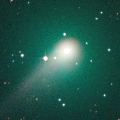
It was observed at 9-10 mag for a long time in 2023. Now it is 16.9 mag (Sept. 29, ATLAS South Africa). It stays 18 mag for a while. In the Northern Hemisphere, it will never be observable after this. In the Southern Hemisphere, it will be getting higher gradually. Date(TT) R.A. (2000) Decl. Delta r Elong. m1 Best Time(A, h) Jan. 24 19 47.96 -64 44.1 9.888 9.229 45 17.7 5:36 (330,-31) Jan. 31 19 52.81 -64 45.8 9.904 9.278 48 17.7 5:33 (331,-29) |
302P/Lemmon-PanSTARRS

|
It brightened very rapidly, and it became brighter than expected. Now it is 17.1 mag (Dec. 26, ATLAS-HKO, Haleakala). Fading slowly. It will be fainter than 18 mag in February. In the Northern Hemisphere, it will be getting lower gradually. It locates somewhat low in the Southern Hemisphere. Date(TT) R.A. (2000) Decl. Delta r Elong. m1 Best Time(A, h) Jan. 24 0 48.98 -0 49.1 3.838 3.577 67 17.7 18:47 ( 48, 43) Jan. 31 0 55.29 -0 1.2 3.942 3.589 62 17.8 18:53 ( 56, 39) |
P/2023 S1 ( PanSTARRS )

|
It brightened up to 13.7 mag in last winter (Jan. 4, 2025, W. Pei). It stays 18 mag for a while. It locates somewhat low in the Northern Hemisphere. In the Southern Hemisphere, it stays observable in good condition. Date(TT) R.A. (2000) Decl. Delta r Elong. m1 Best Time(A, h) Jan. 24 15 5.93 -26 18.0 3.377 3.220 72 17.8 5:36 (341, 26) Jan. 31 15 12.41 -27 1.1 3.300 3.240 77 17.8 5:33 (345, 26) |
C/2024 X2 ( ATLAS )

|
Now it is 17.5 mag (Dec. 26, Hidenori Nohara). Fading slowly. It will be fainter than 18 mag in February. It stays observable in good condition. Date(TT) R.A. (2000) Decl. Delta r Elong. m1 Best Time(A, h) Jan. 24 8 22.23 9 20.6 3.083 4.056 169 17.9 0:12 ( 0, 64) Jan. 31 8 12.71 11 20.3 3.111 4.081 168 17.9 23:30 ( 0, 66) |
C/2019 U5 ( PanSTARRS )
|
Now it is 17.8 mag (Dec. 28, Jean-Claude Merlin). It stays 18 mag for a while. It stays extremely low in the Northern Hemisphere. In the Southern Hemisphere, it stays observable in good condition. Date(TT) R.A. (2000) Decl. Delta r Elong. m1 Best Time(A, h) Jan. 24 4 30.89 -45 21.6 8.830 8.995 96 17.9 20:16 ( 0, 10) Jan. 31 4 27.44 -44 41.1 8.926 9.039 93 17.9 19:45 ( 0, 10) |
217P/LINEAR
|
It brightened up to 12.1 mag in early summer (June 10, Taras Prystavski). Now it is 17.7 mag (Dec. 30, Taras Prystavski). Fading gradually. It will be fainter than 18 mag in February. It stays observable in good condition. Date(TT) R.A. (2000) Decl. Delta r Elong. m1 Best Time(A, h) Jan. 24 8 42.26 18 39.0 1.903 2.885 175 17.9 0:32 ( 0, 74) Jan. 31 8 34.88 19 30.5 1.955 2.938 175 18.0 23:52 ( 0, 74) |
276P/Vorobjov

|
Now it is 17.7 mag (Jan. 7, Ken-ichi Kadota). Fading slowly. It will be fainter than 18 mag in February. It stays observable in good condition. Date(TT) R.A. (2000) Decl. Delta r Elong. m1 Best Time(A, h) Jan. 24 6 37.75 5 3.2 3.409 4.293 150 17.9 22:23 ( 0, 60) Jan. 31 6 34.77 5 17.9 3.468 4.305 144 18.0 21:52 ( 0, 60) |
63P/Wild 1
|
Now it is 18.1 mag (Jan. 10, ATLAS-MLO, Mauna Loa). Brightening gradually. In the Northern Hemisphere, it stays observable in good condition. It stays extremely low in the Southern Hemisphere. Date(TT) R.A. (2000) Decl. Delta r Elong. m1 Best Time(A, h) Jan. 24 6 12.04 52 6.2 1.690 2.513 138 18.1 21:58 (180, 73) Jan. 31 6 6.74 51 13.5 1.695 2.474 133 17.9 21:25 (180, 74) |
407P/PanSTARRS-Fuls
|
|
It has not been observed yet in this apparition. It stays 18 mag for a while. In the Northern Hemisphere, it stays observable in good condition. It locates somewhat low in the Southern Hemisphere. Date(TT) R.A. (2000) Decl. Delta r Elong. m1 Best Time(A, h) Jan. 24 7 19.92 26 35.6 1.558 2.518 163 18.0 23:05 ( 0, 82) Jan. 31 7 14.18 26 54.9 1.566 2.496 155 17.9 22:32 ( 0, 82) |
489P/Denning
|
|
It had been lost for 113 years. It passed the perihelion on Dec. 4. It brightened up to 18 mag in outburst in 2007. It stays 22 mag for a while. It stays observable in good condition. Date(TT) R.A. (2000) Decl. Delta r Elong. m1 Best Time(A, h) Jan. 24 13 6.39 -2 50.4 1.075 1.659 107 21.7 4:54 ( 0, 52) Jan. 31 13 14.20 -3 50.5 1.046 1.686 112 21.6 4:35 ( 0, 51) |