Weekly Information about Bright Comets (2026 Mar. 14: North)
|
Japanese version Home page |
Updated on March 18, 2026 |
|||
|
||||
|
Best time and the azimuth, altitude (A,h) are at lat. 35 deg in the Northern Hemisphere. Azimuth indicates 0 for south, 90 for west, 180 for north, 270 for east. |

|
|
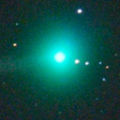
Kreutz sungrazer comet discovered furthest from Sun in history. It will approach to Sun down to 0.005 a.u. on Apr. 4. Brightening rapidly. Now it is 10.5 mag (Mar. 11, Chris Wyatt). It is expected to brighten up to 0-1 mag when observable on the ground. Its brightness evolution is somewhat getting down recently. Date(TT) R.A. (2000) Decl. Delta r Elong. m1 Best Time(A, h) Mar. 14 2 25.39 -10 22.4 1.233 0.847 43 9.7 19:30 ( 69, 12) Mar. 21 2 9.80 -6 21.7 1.196 0.651 32 8.5 19:36 ( 80, 4) |
 C/2024 E1 ( Wierzchos )
|
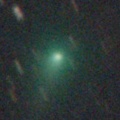
It brightened up to 6.6 mag in January (Jan. 28, Chris Wyatt). Now it is 10.2 mag (Mar. 11, Chris Wyatt). Fading rapidly. It will be getting lower gradually after this, and it will be unobservable in June. Date(TT) R.A. (2000) Decl. Delta r Elong. m1 Best Time(A, h) Mar. 14 3 41.97 -0 38.3 1.319 1.222 61 9.3 19:30 ( 63, 33) Mar. 21 4 6.41 5 12.7 1.477 1.334 61 9.9 19:36 ( 70, 35) |
88P/Howell
|
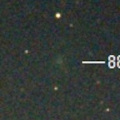
Now it is 10.5 mag (Mar. 10, Martin Masek). Fading gradually. It stays extremely low in the Northern Hemisphere. But it will become high in summer. It locates somewhat low in the Southern Hemisphere. But it will become high in summer. Date(TT) R.A. (2000) Decl. Delta r Elong. m1 Best Time(A, h) Mar. 14 21 14.19 -18 28.4 2.001 1.359 37 9.8 4:48 (293, 1) Mar. 21 21 38.73 -16 44.7 1.985 1.358 38 9.7 4:38 (291, 1) |
C/2025 R3 ( PanSTARRS )

|
It became brighter than expected. It is expected to brighten up to 5 mag in April. Now it is 10.1 mag (Mar. 9, Mike Olason). It brightens up to 5 mag, but it will turn to fade out rapidly after that. In the Northern Hemisphere, it will be unobservable in April. In the Southern Hemisphere, it is not observable now, but it will appear in April. At the high light, it is observable in the low sky before the perihelion passage in the Northern Hemisphere, or after the perihelion in the Southern Hemisphere. Date(TT) R.A. (2000) Decl. Delta r Elong. m1 Best Time(A, h) Mar. 14 22 28.98 18 33.2 1.747 0.968 26 10.6 4:48 (252, 8) Mar. 21 22 32.91 19 1.0 1.576 0.848 28 9.8 4:38 (254, 10) |
C/2025 A6 ( Lemmon )
|
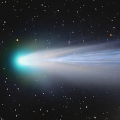
It brightened up to 3.7 mag in late October (Oct. 26, Juan Jose Gonzalez). Now it is 11.9 mag (Feb. 28, Andrew Pearce). It will fade out rapidly after this. In the Northern Hemisphere, it is not observable now, but it will appear in April. In the Southern Hemisphere, it stays observable in good condition. Date(TT) R.A. (2000) Decl. Delta r Elong. m1 Best Time(A, h) Mar. 14 15 0.17 -64 30.5 1.901 2.335 102 10.9 3:38 ( 0,-10) Mar. 21 14 15.54 -65 17.7 1.899 2.431 110 11.2 2:26 ( 0,-10) |
24P/Schaumasse
|
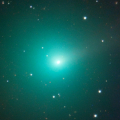
It brightened up to 8.4 mag in January (Jan. 14, Mitsunori Tsumura). Now it is 11.2 mag (Mar. 11, Toru Yusa). Fading rapidly. It will be fainter than 18 mag in June. It stays observable in good condition. Date(TT) R.A. (2000) Decl. Delta r Elong. m1 Best Time(A, h) Mar. 14 15 28.68 5 28.9 0.657 1.450 121 11.6 4:04 ( 0, 60) Mar. 21 15 26.80 5 8.2 0.665 1.501 128 12.1 3:34 ( 0, 60) |
235P/LINEAR
|
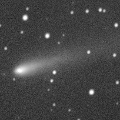
It became brighter than expected. Now it is 13.1 mag (Feb. 19, Ken-ichi Kadota). Fading gradually. It stays observable in good condition. Date(TT) R.A. (2000) Decl. Delta r Elong. m1 Best Time(A, h) Mar. 14 16 51.12 -17 13.5 1.670 2.080 99 13.2 4:48 (349, 37) Mar. 21 16 59.26 -16 40.5 1.612 2.097 104 13.3 4:38 (351, 38) |
240P/NEAT
|
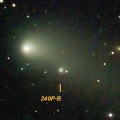
It brightened up to 11.1 mag in winter (Nov. 15, Masayoshi Yoshimi). The component B also brightened rapidly up to 13.8 mag (Ded. 8, Masayoshi Yoshimi). Now it is 13.8 mag (Mar. 5, Thomas Lehmann). Fading gradually. In the Northern Hemisphere, it will be getting lower gradually. In the Southern Hemisphere, it will be unobservable in June. Date(TT) R.A. (2000) Decl. Delta r Elong. m1 Best Time(A, h) Mar. 14 4 28.56 31 1.6 2.216 2.222 77 13.4 19:30 ( 93, 59) Mar. 21 4 41.44 32 0.0 2.309 2.239 73 13.5 19:36 ( 98, 55) |
78P/Gehrels 2

|
It will brighten up to 12 mag in summer. Now it is 14.5 mag (Jan. 16, Kunihiro Shima). Brightening slowly. Now it is not observable. It will appear in May in the Southern Hemisphere, or in June in the Northern Hemisphere. Date(TT) R.A. (2000) Decl. Delta r Elong. m1 Best Time(A, h) Mar. 14 23 54.92 1 39.9 3.157 2.173 6 13.6 19:30 (101,-11) Mar. 21 0 9.53 3 3.0 3.145 2.152 3 13.5 19:36 (105,-14) |
29P/Schwassmann-Wachmann 1
|
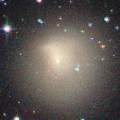
Now it is 11.4 mag (Mar. 11, Chris Wyatt). It stays observable in good condition. Date(TT) R.A. (2000) Decl. Delta r Elong. m1 Best Time(A, h) Mar. 14 11 15.00 -2 44.8 5.324 6.311 172 13.6 23:47 ( 0, 52) Mar. 21 11 12.00 -2 28.9 5.335 6.312 167 13.6 23:16 ( 0, 52) |
C/2026 B2 ( Sun-Gao )

|
Bright new comet discovered near Sun. It became brighter furthermore after the discovery, brightened up to 12.7 mag (Feb. 14, Mike Olason). Now it is 13.6 mag (Mar. 9, Mike Olason). It will fade out rapidly after this. It will be fainter than 18 mag in June. It stays extremely low in the Northern Hemisphere. In the Southern Hemisphere, it will never be observable after this. Date(TT) R.A. (2000) Decl. Delta r Elong. m1 Best Time(A, h) Mar. 14 22 15.16 28 48.1 2.257 1.578 36 14.0 4:48 (246, 16) Mar. 21 22 39.25 31 2.6 2.328 1.638 36 14.3 4:38 (243, 16) |
C/2024 J3 ( ATLAS )
|
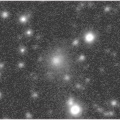
Now it is 15.2 mag (Mar. 4, Toru Yusa). Brightening slowly. In the Northern Hemisphere, it stays observable in good condition. In the Southern Hemisphere, it will be getting higher gradually. Date(TT) R.A. (2000) Decl. Delta r Elong. m1 Best Time(A, h) Mar. 14 20 6.16 7 12.7 4.983 4.455 52 14.2 4:48 (283, 30) Mar. 21 20 10.07 8 46.0 4.873 4.426 57 14.1 4:38 (284, 34) |
C/2024 T5 ( ATLAS )
|
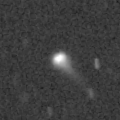
Now it is 14.7 mag (Mar. 6, ATLAS-MLO, Mauna Loa). Brightening slowly. In the Northern Hemisphere, it will be unobservable soon. In the Southern Hemisphere, it will be getting lower gradually. But it will be getting higher again after June. It is expected to brighten up to 11 mag in next winter. Date(TT) R.A. (2000) Decl. Delta r Elong. m1 Best Time(A, h) Mar. 14 2 59.59 -27 53.9 5.747 5.239 54 14.4 19:30 ( 50, 6) Mar. 21 3 4.70 -26 39.2 5.758 5.201 51 14.3 19:36 ( 55, 2) |
C/2022 QE78 ( ATLAS )
|
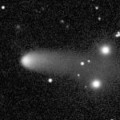
Now it is 14.5 mag (Mar. 7, Toru Yusa). It stays 15 mag for a while. In the Northern Hemisphere, it stays observable in good condition. It locates somewhat low in the Southern Hemisphere. Date(TT) R.A. (2000) Decl. Delta r Elong. m1 Best Time(A, h) Mar. 14 9 2.92 31 7.8 4.898 5.638 134 14.5 21:35 ( 0, 86) Mar. 21 9 1.95 31 26.8 4.989 5.651 127 14.5 21:07 ( 0, 86) |
C/2022 N2 ( PanSTARRS )
|
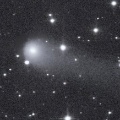
Now it is 14.9 mag (Mar. 11, Toru Yusa). It stays 15 mag for a while. It will be unobservable in May. Date(TT) R.A. (2000) Decl. Delta r Elong. m1 Best Time(A, h) Mar. 14 3 53.45 25 5.8 4.562 4.300 68 14.6 19:30 ( 89, 50) Mar. 21 4 0.49 25 17.7 4.684 4.327 63 14.7 19:36 ( 93, 44) |
C/2014 UN271 ( Bernardinelli-Bernstein )
|
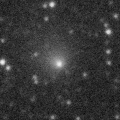
Very large comet. It is expected to brighten up to 13 mag in 2031. Now it is 15.2 mag (Mar. 4, ATLAS Chile). It stays 15 mag for a while. In the Northern Hemisphere, it is not observable now. In the Southern Hemisphere, it stays observable in good condition. In the Northern Hemisphere, it is not observable until 2030. Date(TT) R.A. (2000) Decl. Delta r Elong. m1 Best Time(A, h) Mar. 14 4 48.22 -71 26.3 14.249 14.174 83 14.8 19:30 ( 10,-19) Mar. 21 4 51.16 -71 2.0 14.214 14.153 84 14.8 19:36 ( 13,-20) |
C/2023 R1 ( PanSTARRS )
|
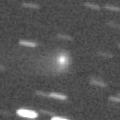
Now it is 14.6 mag (Mar. 6, ATLAS-MLO, Mauna Loa). It stays 14 mag for a while. It stays observable in good condition. Date(TT) R.A. (2000) Decl. Delta r Elong. m1 Best Time(A, h) Mar. 14 19 34.54 -3 30.0 3.975 3.581 59 14.9 4:48 (298, 29) Mar. 21 19 33.20 -3 31.2 3.850 3.576 66 14.8 4:38 (302, 32) |
C/2021 G2 ( ATLAS )

|
Now it is 15.2 mag (Mar. 6, Thomas Lehmann). It stays 15 mag for a while. It stays observable in good condition. Date(TT) R.A. (2000) Decl. Delta r Elong. m1 Best Time(A, h) Mar. 14 17 28.23 6 34.4 6.369 6.478 91 14.8 4:48 (324, 57) Mar. 21 17 29.63 7 24.4 6.304 6.510 97 14.8 4:38 (330, 59) |
C/2025 Q3 ( ATLAS )
|
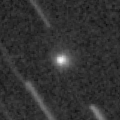
It became brighter than expected. Now it is 14.9 mag (Mar. 8, Martin Masek). Fading gradually. In the Northern Hemisphere, it will be unobservable soon. It locates somewhat low in the Southern Hemisphere. Date(TT) R.A. (2000) Decl. Delta r Elong. m1 Best Time(A, h) Mar. 14 2 40.15 -21 41.5 2.639 2.121 48 15.3 19:30 ( 57, 7) Mar. 21 2 48.52 -22 34.7 2.685 2.130 46 15.4 19:36 ( 61, 2) |
C/2025 T1 ( ATLAS )
|
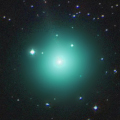
It brightened up to 9.0 mag from late November to early December (Nov. 22, Thomas Lehmann). Fading rapidly. It will be fainter than 18 mag in May. In the Northern Hemisphere, it will never be observable after this. In the Southern Hemisphere, it will be getting higher gradually. Date(TT) R.A. (2000) Decl. Delta r Elong. m1 Best Time(A, h) Mar. 14 22 5.82 -21 0.8 2.731 1.914 28 15.5 4:48 (288,-10) Mar. 21 22 12.19 -22 32.8 2.732 1.994 34 15.8 4:38 (291, -9) |
40P/Vaisala 1
|
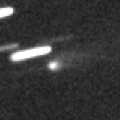
It became brighter than expected, brightened up to 14.3 mag (Jan. 21, Michael Jager). Now it is 16.2 mag (Feb. 19, ATLAS-HKO, Haleakala). Fading gradually. It stays observable in good condition. Date(TT) R.A. (2000) Decl. Delta r Elong. m1 Best Time(A, h) Mar. 14 17 35.79 -10 53.6 1.959 2.184 89 15.5 4:48 (333, 40) Mar. 21 17 43.66 -10 38.7 1.916 2.221 94 15.6 4:38 (336, 41) |
93P/Lovas 1
|
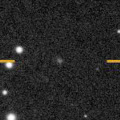
Now it is 16.0 mag (Jan. 18, Kunihiro Shima). It stays 16 mag for a while. In the Northern Hemisphere, it will be unobservable soon. In the Southern Hemisphere, it is not observable now. Date(TT) R.A. (2000) Decl. Delta r Elong. m1 Best Time(A, h) Mar. 14 0 43.38 11 8.2 2.647 1.765 22 15.9 19:30 (101, 4) Mar. 21 1 0.78 13 13.7 2.648 1.746 20 15.8 19:36 (105, 2) |
218P/LINEAR

|
Now it is 16.1 mag (Feb. 24, ATLAS-HKO, Haleakala). Fading gradually. It will be fainter than 18 mag in June. It locates somewhat low in the Northern Hemisphere. In the Southern Hemisphere, it stays observable in good condition. Date(TT) R.A. (2000) Decl. Delta r Elong. m1 Best Time(A, h) Mar. 14 19 44.10 -18 56.7 1.275 1.136 58 15.8 4:48 (308, 17) Mar. 21 20 11.82 -17 32.9 1.288 1.150 58 15.8 4:38 (306, 16) |
10P/Tempel 2
|
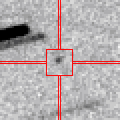
It is expected to brighten up to 8 mag in summer. Now it is 17.4 mag (Mar. 1, Francois Kugel). Brightening rapidly. It stays observable in good condition. Date(TT) R.A. (2000) Decl. Delta r Elong. m1 Best Time(A, h) Mar. 14 17 38.25 -10 59.6 1.748 1.989 88 16.3 4:48 (332, 40) Mar. 21 17 51.97 -10 49.6 1.638 1.946 91 15.8 4:38 (334, 40) |
C/2024 R4 ( PanSTARRS )
|
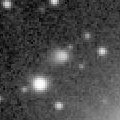
It brightened rapidly. It is expected to brighten up to 13.5 mag from 2027 to 2028. Now it is 16.5 mag (Jan. 4, Ken-ichi Kadota). It stays 16 mag for a while. In the Northern Hemisphere, it will be getting higher gradually. In the Southern Hemisphere, it is not observable now, but it will appear in April. Date(TT) R.A. (2000) Decl. Delta r Elong. m1 Best Time(A, h) Mar. 14 22 0.67 26 12.9 7.190 6.422 36 16.1 4:48 (250, 17) Mar. 21 22 3.36 27 5.3 7.128 6.384 38 16.0 4:38 (250, 20) |
C/2022 R6 ( PanSTARRS )
|
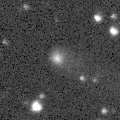
Now it is 16.1 mag (Mar. 7, ATLAS-MLO, Mauna Loa). It stays 17 mag for a while. In the Northern Hemisphere, it will be getting lower gradually after this, and it will be unobservable in June. In the Southern Hemisphere, it stays observable in good condition. Date(TT) R.A. (2000) Decl. Delta r Elong. m1 Best Time(A, h) Mar. 14 8 31.05 -4 3.6 5.976 6.701 133 16.1 21:03 ( 0, 51) Mar. 21 8 30.19 -3 10.7 6.058 6.710 127 16.2 20:35 ( 0, 52) |
3I/2025 N1 ( ATLAS )
|
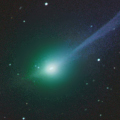
Third interstellar object in history following 1I/'Oumuamua and 2I/Borisov. The eccentricity is extremely big as 6. It approached to Sun down to 1.38 a.u. in late October. It brightened up to 8.9 mag in November (Nov. 12, Toshiyuki Takahashi). Now it is 15.8 mag (Mar. 5, Thomas Lehmann). Fading rapidly. It will be fainter than 18 mag in April. In the Northern Hemisphere, it will be getting lower gradually. It locates somewhat low in the Southern Hemisphere. Date(TT) R.A. (2000) Decl. Delta r Elong. m1 Best Time(A, h) Mar. 14 6 51.83 20 17.5 4.602 5.016 109 16.3 19:30 ( 5, 75) Mar. 21 6 48.71 20 22.0 4.963 5.251 101 16.7 19:36 ( 35, 73) |
C/2025 J1 ( Borisov )
|
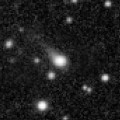
Now it is 16.6 mag (Mar. 1, Ken-ichi Kadota). It stays 17 mag for a while. In the Northern Hemisphere, it will be getting lower gradually after this, and it will be unobservable in June. In the Southern Hemisphere, it is not observable now. Date(TT) R.A. (2000) Decl. Delta r Elong. m1 Best Time(A, h) Mar. 14 4 53.90 54 54.9 3.596 3.672 86 16.4 19:30 (143, 61) Mar. 21 4 57.53 52 36.5 3.687 3.658 80 16.5 19:36 (135, 58) |
63P/Wild 1
|
Now it is 15.8 mag (Mar. 6, Thomas Lehmann). Brightening gradually. In the Northern Hemisphere, it stays observable in good condition. It stays extremely low in the Southern Hemisphere. Date(TT) R.A. (2000) Decl. Delta r Elong. m1 Best Time(A, h) Mar. 14 6 19.92 43 43.8 1.866 2.263 100 16.7 19:30 (144, 79) Mar. 21 6 28.57 42 21.2 1.908 2.232 95 16.5 19:36 (126, 76) |
145P/Shoemaker-Levy 5
|
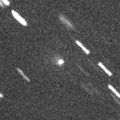
Now it is 16.1 mag (Mar. 7, Catalina Sky Survey). Fading slowly. It will be fainter than 18 mag in June. It will be unobservable soon in the Southern Hemisphere, or in May in the Northern Hemisphere. Date(TT) R.A. (2000) Decl. Delta r Elong. m1 Best Time(A, h) Mar. 14 2 6.49 17 15.7 2.539 1.927 42 16.6 19:30 ( 95, 24) Mar. 21 2 23.09 19 0.0 2.597 1.941 39 16.6 19:36 ( 99, 22) |
C/2024 G6 ( ATLAS )
|
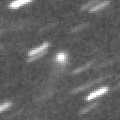
Now it is 16.9 mag (Mar. 2, ATLAS Chile). It stays 17 mag for a while. It stays observable in good condition. Date(TT) R.A. (2000) Decl. Delta r Elong. m1 Best Time(A, h) Mar. 14 16 34.38 1 5.2 6.101 6.431 105 16.6 4:48 (351, 56) Mar. 21 16 32.27 2 10.0 5.994 6.433 111 16.6 4:38 (359, 57) |
123P/West-Hartley
|
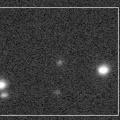
It will brighten up to 15 mag from autumn to winter. Now it is 17.7 mag (Mar. 6, ATLAS-HKO, Haleakala). Brightening slowly. It will be unobservable in May in the Southern Hemisphere, or in June in the Northern Hemisphere. Date(TT) R.A. (2000) Decl. Delta r Elong. m1 Best Time(A, h) Mar. 14 4 0.54 30 13.1 2.735 2.594 71 16.6 19:30 ( 95, 53) Mar. 21 4 10.57 30 41.1 2.793 2.568 66 16.6 19:36 ( 99, 48) |
195P/Hill
|
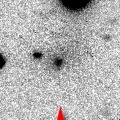
Now it is 17.0 mag (Feb. 25, ATLAS South Africa). It stays 17 mag for a while. In the Northern Hemisphere, it will be unobservable in June. In the Southern Hemisphere, it stays observable in good condition. Date(TT) R.A. (2000) Decl. Delta r Elong. m1 Best Time(A, h) Mar. 14 9 23.64 -32 25.3 3.813 4.551 133 16.7 21:55 ( 0, 23) Mar. 21 9 21.34 -31 41.3 3.843 4.558 130 16.7 21:26 ( 0, 23) |
C/2025 L1 ( ATLAS )
|
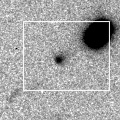
It was expected to brighten up to 13.5 mag. But actually, it is getting diffuse and fading very rapidly. Now it is 17.4 mag (Mar. 10, Toru Yusa). It will fade out rapidly after this. It will be fainter than 18 mag in April. In the Northern Hemisphere, it stays observable in good condition. In the Southern Hemisphere, it will be getting lower gradually. Date(TT) R.A. (2000) Decl. Delta r Elong. m1 Best Time(A, h) Mar. 14 15 30.42 8 9.5 1.138 1.857 121 16.7 4:06 ( 0, 63) Mar. 21 15 13.79 17 28.6 1.104 1.898 129 16.8 3:22 ( 0, 72) |
493P/2024 Q2 ( LONEOS )
|
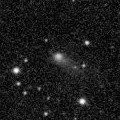
Now it is 16.3 mag (Mar. 3, Alfons Diepvens). It stays 17 mag for a while. It will be unobservable in April in the Southern Hemisphere, or in July in the Northern Hemisphere. Date(TT) R.A. (2000) Decl. Delta r Elong. m1 Best Time(A, h) Mar. 14 4 52.89 47 5.3 3.796 3.839 84 16.8 19:30 (127, 64) Mar. 21 5 0.94 46 37.1 3.891 3.843 79 16.8 19:36 (124, 60) |
C/2023 F3 ( ATLAS )

|
Now it is 16.9 mag (Feb. 3, Ken-ichi Kadota). It stays 17 mag for a while. In the Northern Hemisphere, it will be getting lower gradually after this, and it will be unobservable in June. In the Southern Hemisphere, it stays observable in good condition. Date(TT) R.A. (2000) Decl. Delta r Elong. m1 Best Time(A, h) Mar. 14 9 30.72 -17 33.2 5.177 6.004 143 16.9 22:02 ( 0, 37) Mar. 21 9 24.53 -16 19.7 5.250 6.030 138 16.9 21:29 ( 0, 39) |
C/2024 A1 ( ATLAS )
|
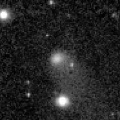
Now it is 17.2 mag (Mar. 7, Thomas Lehmann). Fading slowly. It will be fainter than 18 mag in June. In the Northern Hemisphere, it stays observable in good condition. In the Southern Hemisphere, it will never be observable after this. Date(TT) R.A. (2000) Decl. Delta r Elong. m1 Best Time(A, h) Mar. 14 6 18.70 63 52.5 4.301 4.537 97 17.0 19:30 (172, 61) Mar. 21 6 15.40 63 47.4 4.428 4.567 91 17.0 19:36 (164, 59) |
43P/Wolf-Harrington

|
Now it is 16.8 mag (Mar. 10, Toru Yusa). Fading gradually. It will be fainter than 18 mag in May. It stays observable in good condition. Date(TT) R.A. (2000) Decl. Delta r Elong. m1 Best Time(A, h) Mar. 14 10 49.16 -7 16.3 1.922 2.893 164 17.0 23:21 ( 0, 48) Mar. 21 10 45.15 -6 34.0 1.961 2.918 160 17.1 22:49 ( 0, 48) |
C/2023 X2 ( Lemmon )
|
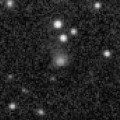
Now it is 18.0 mag (Mar. 3, Erik Bryssinck). It stays 17 mag for a while. In the Northern Hemisphere, it stays observable in good condition. In the Southern Hemisphere, it will never be observable after this. Date(TT) R.A. (2000) Decl. Delta r Elong. m1 Best Time(A, h) Mar. 14 21 29.39 82 16.8 5.091 5.121 86 17.0 4:48 (189, 36) Mar. 21 21 36.37 82 51.3 5.131 5.127 84 17.1 4:38 (188, 36) |
164P/Christensen
|
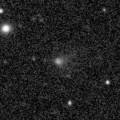
Now it is 16.9 mag (Mar. 6, Thomas Lehmann). Fading gradually. It will be fainter than 18 mag in April. In the Northern Hemisphere, it stays observable in good condition. It locates somewhat low in the Southern Hemisphere. Date(TT) R.A. (2000) Decl. Delta r Elong. m1 Best Time(A, h) Mar. 14 10 44.71 31 57.5 2.090 2.983 148 17.1 23:16 ( 0, 87) Mar. 21 10 39.37 32 2.1 2.169 3.023 142 17.2 22:44 ( 0, 87) |
C/2023 RS61 ( PanSTARRS )
|
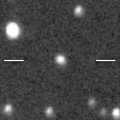
It is around 20 mag usually. However, it brightened in outburst in 2025 autumn up to 17.0 mag (Sept. 4, Taras Prystavski). Now it is 17.3 mag (Mar. 6, ATLAS-HKO, Haleakala). It stays 17 mag for a while. In the Northern Hemisphere, it will be getting lower gradually after this, and it will be unobservable in May. But it will be observable again in June. In the Southern Hemisphere, it is not observable now, but it will appear in July. Date(TT) R.A. (2000) Decl. Delta r Elong. m1 Best Time(A, h) Mar. 14 2 57.03 35 39.3 9.123 8.683 60 17.1 19:30 (109, 42) Mar. 21 3 0.48 35 42.5 9.207 8.674 55 17.1 19:36 (112, 36) |
(248590) 2006 CS
|
|
It seems to be a parent of the beta-Tucanids meteor shower. Fading gradually. It will be fainter than 18 mag in May. In the Northern Hemisphere, it will be getting higher gradually. In the Southern Hemisphere, it will be unobservable soon. Date(TT) R.A. (2000) Decl. Delta r Elong. m1 Best Time(A, h) Mar. 14 2 55.81 -22 24.0 0.206 0.884 52 17.2 19:30 ( 56, 10) Mar. 21 2 53.26 18 41.8 0.158 0.895 46 17.4 19:36 ( 98, 29) |
C/2023 H5 ( Lemmon )

|
Now it is 17.3 mag (Feb. 28, D. Buczynski). It stays 18 mag for a while. In the Northern Hemisphere, it stays observable in good condition. In the Southern Hemisphere, it will never be observable after this. Date(TT) R.A. (2000) Decl. Delta r Elong. m1 Best Time(A, h) Mar. 14 21 10.75 61 29.7 5.049 4.799 69 17.2 4:48 (215, 38) Mar. 21 21 21.70 61 41.9 5.099 4.824 68 17.3 4:38 (215, 38) |
A/2025 Y1
|
|
Cometary activity was detected by Taras Prystavski on Jan. 30, and by Alan Hale on Feb. 12, respectively. Now it is 17.7 mag (Mar. 2, ATLAS Chile). It stays 17 mag for a while. It stays observable in good condition. Date(TT) R.A. (2000) Decl. Delta r Elong. m1 Best Time(A, h) Mar. 14 13 7.58 0 51.2 5.174 6.100 156 17.4 1:43 ( 0, 56) Mar. 21 13 5.08 1 18.6 5.085 6.048 163 17.3 1:13 ( 0, 56) |
C/2024 G2 ( ATLAS )

|
Now it is 17.7 mag (Feb. 21, Ken-ichi Kadota). Fading slowly. It will be fainter than 18 mag in May. It stays observable in good condition. Date(TT) R.A. (2000) Decl. Delta r Elong. m1 Best Time(A, h) Mar. 14 11 28.51 1 20.0 4.721 5.715 177 17.4 0:05 ( 0, 56) Mar. 21 11 22.64 2 43.8 4.749 5.733 170 17.5 23:27 ( 0, 58) |
C/2025 R2 ( SWAN )
|
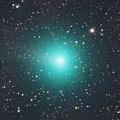
It brightened up to 5.2 mag in October (Oct. 11, Virgilio Gonano). Now it is 16.9 mag (Mar. 1, Thomas Lehmann). Fading gradually. It will be fainter than 18 mag soon. It locates somewhat low in the Northern Hemisphere. It stays extremely low in the Southern Hemisphere. Date(TT) R.A. (2000) Decl. Delta r Elong. m1 Best Time(A, h) Mar. 14 2 34.58 19 5.5 3.648 3.094 49 17.5 19:30 ( 93, 31) Mar. 21 2 43.26 19 41.6 3.814 3.181 44 17.7 19:36 ( 97, 26) |
C/2024 G4 ( PanSTARRS )
|
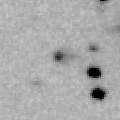
Now it is 17.5 mag (Feb. 18, Kunihiro Shima). It stays 17 mag for a while. In the Northern Hemisphere, it stays observable in good condition. In the Southern Hemisphere, it will be getting higher gradually. Date(TT) R.A. (2000) Decl. Delta r Elong. m1 Best Time(A, h) Mar. 14 19 46.19 1 26.3 5.367 4.901 57 17.6 4:48 (292, 30) Mar. 21 19 51.86 1 45.4 5.287 4.900 62 17.5 4:38 (294, 33) |
210P/Christensen

|
It brightened up to 9.5 mag in late November (Nov. 28, Michael Jager, Gerald Rhemann, E. Prosperi). Now it is 16.7 mag (Mar. 2, Thomas Lehmann). It will fade out rapidly after this. It will be fainter than 18 mag soon. It stays observable in good condition. Date(TT) R.A. (2000) Decl. Delta r Elong. m1 Best Time(A, h) Mar. 14 15 41.20 -4 18.6 1.223 1.904 117 17.6 4:17 ( 0, 51) Mar. 21 15 33.30 -3 22.0 1.223 1.985 126 17.8 3:41 ( 0, 52) |
C/2020 V2 ( ZTF )
|
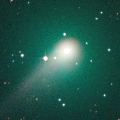
It was observed at 9-10 mag for a long time in 2023. It stays 18 mag for a while. In the Northern Hemisphere, it will never be observable after this. In the Southern Hemisphere, it stays observable in good condition. Date(TT) R.A. (2000) Decl. Delta r Elong. m1 Best Time(A, h) Mar. 14 20 15.95 -66 1.1 9.827 9.569 72 17.8 4:48 (338,-21) Mar. 21 20 18.25 -66 24.2 9.794 9.617 76 17.8 4:38 (339,-20) |
124P/Mrkos

|
Now it is 17.6 mag (Feb. 25, Alfons Diepvens). It stays 18 mag for a while. In the Northern Hemisphere, it stays observable in good condition. It locates somewhat low in the Southern Hemisphere. Date(TT) R.A. (2000) Decl. Delta r Elong. m1 Best Time(A, h) Mar. 14 8 7.27 53 19.0 1.328 1.957 114 17.9 20:40 (180, 72) Mar. 21 8 7.79 50 16.2 1.350 1.930 109 17.9 20:13 (180, 75) |
C/2025 V2 ( Rankin )
|
|
It is expected to brighten up to 12.5 mag in 2027 spring. Now it is 18.0 mag (Mar. 6, ATLAS-HKO, Haleakala). It stays 18 mag for a while. It stays observable in good condition. Date(TT) R.A. (2000) Decl. Delta r Elong. m1 Best Time(A, h) Mar. 14 9 8.82 19 53.4 3.745 4.557 140 18.0 21:41 ( 0, 75) Mar. 21 9 5.78 20 33.0 3.761 4.496 132 17.9 21:10 ( 0, 75) |
A/2025 A1
|
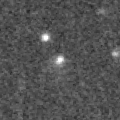
Cometary activity was detected by David Rankin, Rob Weryk, Denis Buczynski, and many other observers. Now it is 17.4 mag (Mar. 11, Toru Yusa). It stays 18 mag for a while. In the Northern Hemisphere, it stays observable in good condition. It stays extremely low in the Southern Hemisphere. Date(TT) R.A. (2000) Decl. Delta r Elong. m1 Best Time(A, h) Mar. 14 8 23.06 37 47.2 5.367 5.980 123 17.9 20:56 (180, 87) Mar. 21 8 22.38 37 52.3 5.434 5.957 117 17.9 20:28 (180, 87) |
407P/PanSTARRS-Fuls
|
|
It has not been observed yet in this apparition. It stays 18 mag for a while. In the Northern Hemisphere, it stays observable in good condition. It locates somewhat low in the Southern Hemisphere. Date(TT) R.A. (2000) Decl. Delta r Elong. m1 Best Time(A, h) Mar. 14 7 7.89 27 16.6 1.816 2.374 111 17.9 19:41 ( 0, 82) Mar. 21 7 12.32 27 6.9 1.878 2.356 106 18.0 19:36 ( 27, 81) |
P/2023 S1 ( PanSTARRS )

|
It brightened up to 13.7 mag in last winter (Jan. 4, 2025, W. Pei). It faded out rapidly after the perihelion passage. Now it is 20.1 mag (Feb. 18, Kunihiro Shima). Fading slowly. It locates somewhat low in the Northern Hemisphere. In the Southern Hemisphere, it stays observable in good condition. Date(TT) R.A. (2000) Decl. Delta r Elong. m1 Best Time(A, h) Mar. 14 15 33.64 -30 22.6 2.831 3.363 114 19.8 4:09 ( 0, 25) Mar. 21 15 33.56 -30 44.5 2.762 3.383 120 19.9 3:41 ( 0, 24) |
489P/Denning
|
|
It had been lost for 113 years. It must have passed the perihelion on Dec. 4. It brightened up to 18 mag in outburst in 2007. It will turn to fade out rapidly after the peak. It stays observable in good condition. Date(TT) R.A. (2000) Decl. Delta r Elong. m1 Best Time(A, h) Mar. 14 13 19.70 -6 19.8 0.959 1.896 152 21.1 1:55 ( 0, 49) Mar. 21 13 14.60 -6 14.5 0.970 1.937 160 21.0 1:23 ( 0, 49) |